


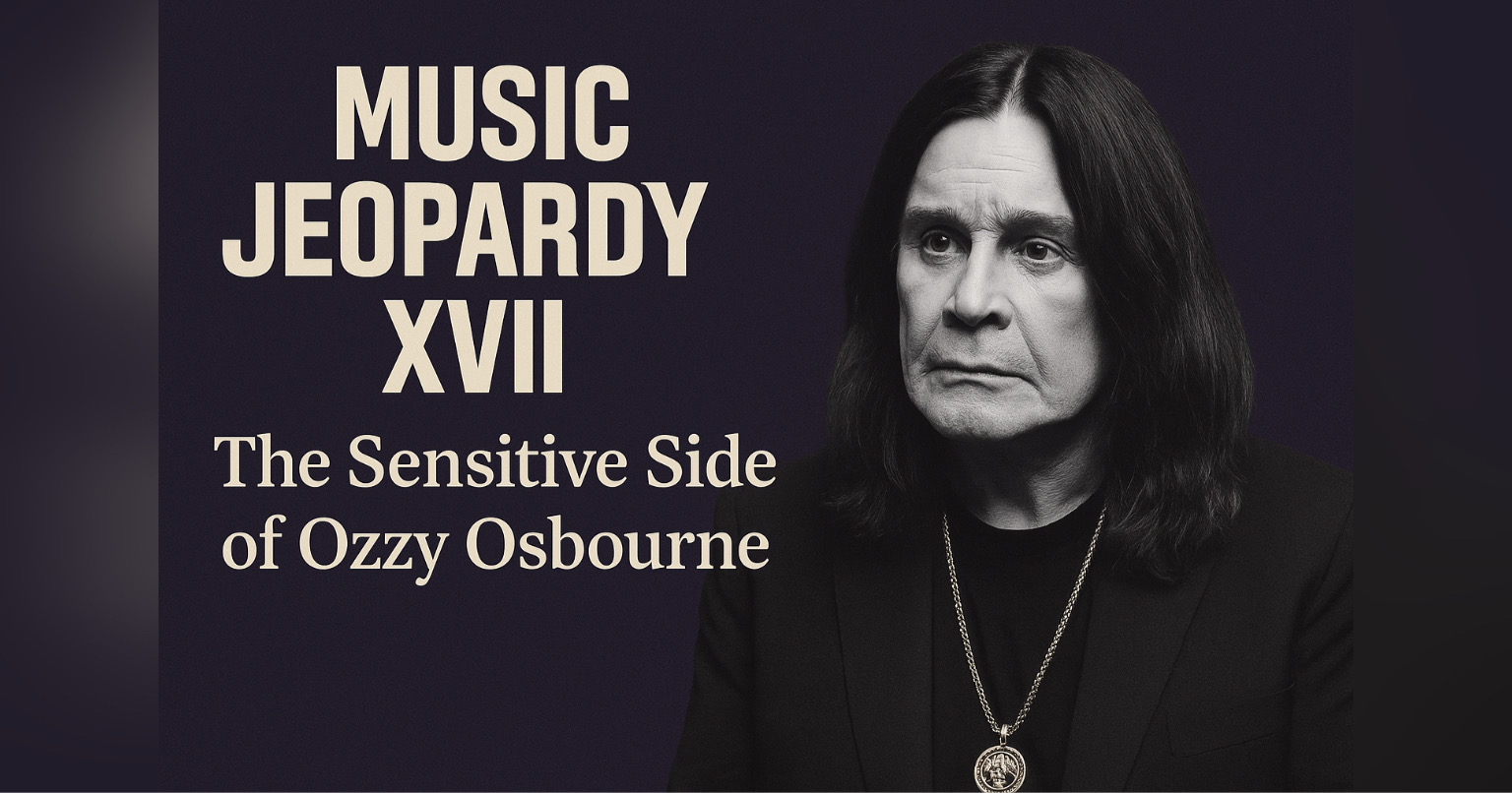
(July 23, 2025) – Ozzy Osbourne, who earned the title “Prince of Darkness” with good reason, died after lengthy illness on Tuesday, July 22, at the age of 76. Needless to say, the music world is in deep mourning over the man who was arguably the singular face of heavy metal — a man who was to that genre what Little Richard or Chuck Berry was to rock-and-roll or what James Brown was to soul.
His unmistakable voice wailed through some of rock’s most ominous lyrics and became the sound of heavy metal’s most fearsome moments. First as the frontman of Black Sabbath, then as a solo force, Ozzy carved out a space in rock history that few have occupied and even fewer have survived for the nearly six decades he dwelled in it.
Black Sabbath was formed in Birmingham, England in the late 1960s, and Ozzy stood at the center of its classic lineup alongside Tony Iommi, Geezer Butler, and Bill Ward. Together, they helped define heavy metal in the 1970s with iconic hard-hitters like “Paranoid,” “War Pigs,” and “Iron Man.” Their music wasn’t for the faint of heart, and neither was their reputation. The band’s name alone evoked unease, and their sound and song titles seemed like continuous attempts — albeit successful ones — to live up to their moniker.
After unceremoniously parting ways with Sabbath in 1979, Ozzy quickly launched a solo career with a bold statement: “Crazy Train.” Backed by late guitarist Randy Rhoads, the song became one of rock’s most enduring anthems. Stadiums — mostly NFL ones as a build-up to kickoffs — have echoed with its opening riff for decades. From there, Ozzy released a steady stream of solo albums, working with an all-star cast of guitarists including Jake E. Lee and Zakk Wylde. Songs like “Mr. Crowley,” “Bark at the Moon,” and the epic “No More Tears” reinforced his place as a powerhouse in metal.
In the 2000s, a new chapter began when The Osbournes brought his seemingly dysfunctional family (they were more loving than most gave them credit for) — and his offbeat, often hilarious personal life — to the small screen. The show remade Ozzy as a household name far beyond the world of metal. Fans connected with the man behind the music, a father and husband navigating domestic chaos with the same unpredictability he brought to the stage.
In recent years, Ozzy had faced serious health challenges, including a Parkinson’s diagnosis and multiple surgeries. Still, he remained committed to his craft, performing when he could and even reuniting earlier this month with Black Sabbath for a special “Back to the Beginning” charity farewell concert in Birmingham — the city where it all began. That show — his first with his Sabbath bandmates in 20 years and his first of any kind since 2018 — is all the more poignant as it was reportedly the highest-grossing one-day concert in Birmingham history. It also, sadly, proved to be his last.
Ozzy is part of the exclusive two-time Rock and Roll Hall of Fame membership — alongside greats like the four individual Beatles, Michael Jackson, Eric Clapton, Stevie Nicks, Tina Turner, and few others — once with Black Sabbath and again as a solo artist. But there’s another side to his legacy that often gets overlooked. Beneath the darkness, there was a tenderness. Songs like “Mama, I’m Coming Home,” “Dreamer,” and “Changes” reveal a softer, more vulnerable Ozzy — one whose lyrics reflect longing, love, and introspection that would make the softer side of Alice Cooper proud.
That more emotional side is the focus of this edition of Music Jeopardy. We’re digging into the ballads, the slow rockers, and the quieter moments that showed us there was always more to Ozzy than the bat-biting theatrics. This time, the screams give way to something a little more heartfelt.
Of course, the blog provides the clues, you provide the responses in this special category — The Softer Side of Ozzy Osbourne.
Make your guesses by providing your responses in the “Your Thoughts” box at the bottom of the article, email or DM me on any of the social media platforms where this is posted. You can also post your answers publicly, but that is not encouraged as we don’t want to spoil it for others. All correct entries will be acknowledged in the next Music Jeopardy, and the winning prize is absolutely nothing but bragging rights!
Below this puzzle’s clues are the results of Music Jeopardy 16. But first, here are your five clues and a bonus for today’s contest (and yes, Google can be your friend here):
Clue 1:

Clue 2:

Clue 3:

Clue 4:

Clue 5:

Bonus:

That’s it. Remember to provide your responses in the “Your Thoughts” box at the bottom of the article or DM me on any of the social media platforms where this is posted.
Here are the Results from Music Jeopardy 16:
Category: Recently Lost Musical Icons
Clue 1: Who was Lou Christie?
Clue 2: What is “There’s a riot going on”?
Clue 3: Who were Mott the Hoople?
Clue 4: Who was Bobby Sherman?
Clue 5: Who are The Whispers?
Bonus: Who were Yarbrough and Peoples?
Winners: David James Stayduhar, Matt Mullen (who also named the category), with a special shoutout to an anonymous player who guessed three of the clues correctly.
Good luck everyone with today’s puzzle 17 and tribute to the late, great Ozzy Osbourne! The correct responses and the results will be revealed with the next Music Jeopardy post!
Rest well in rock-and-roll heaven, Ozzy (1948-2025)!
DJRob
DJRob (he/him) is a freelance music blogger from the East Coast who covers R&B, hip-hop, disco, pop, rock and country genres – plus lots of music news and current stuff! You can follow him on Bluesky at @djrobblog.bsky.social, X (formerly Twitter) at @djrobblog, on Facebook or on Meta’s Threads.
You can also register for free here (or select the menu bars above) to receive notifications of future articles.