


(July 22, 2025) — The entertainment world is reeling from the tragic news of Malcolm-Jamal Warner’s untimely passing. The 54-year-old actor, poet, and Grammy-winning performer drowned in Costa Rica on Sunday (July 20), cutting short a career that began with one of the most beloved TV roles of the 1980s and early ‘90s: Theo Huxtable, the wisecracking but big-hearted coming-of-age son of The Cosby Show’s Cliff and Clair.
In that groundbreaking NBC comedy, Theo’s portrayal as the lone son of the Huxtables — an upper middle class Black family living in a posh NYC brownstone — endeared him to millions. The only Black nuclear family portrayal before that had been a decade earlier on CBS’ Good Times. There, Theo’s eldest-son counterpart JJ (played by Jimmy “J.J.” Walker), was equally erstwhile and just as witty, but much goofier than Theo and often presented as a caricature of the Black male stereotype — closer to blaxploitation than Black celebration. In fact, for as much flack as The Cosby Show received for its “unrealistic” portrayal of their family, the Huxtables actually made more economic sense than the Evans — a family with two working adults and two adult children who for whatever reason could never escape the projects.

No such problem for the Huxtables and Theo. As we watched him each Thursday, there were times we wanted to guide, scold, but always root for him and love him as he navigated his path through a household dominated by women and a tough father in Cosby who, importantly, remained a strong presence in TV’s unprecedented rendering of such a family. We always knew Theo would be ok.
Though Warner never received an Emmy for his legendary character, he won a Grammy in 2015 for Best Traditional R&B Performance as part of the Robert Glasper Experiment’s “Jesus Children,” alongside Lalah Hathaway — an award for his poetic rap at the song’s bridge, an accolade few could have predicted decades earlier. For readers who’ve not heard it, click below. It’s a phenomenal remake of Stevie Wonder’s “Jesus Children of America” from his 1973 Innervisions album. (Malcolm’s verse comes at the 3:02 mark.)
But long before that unexpected trophy, Warner helped immortalize another classic R&B song on national television — without singing a single note.
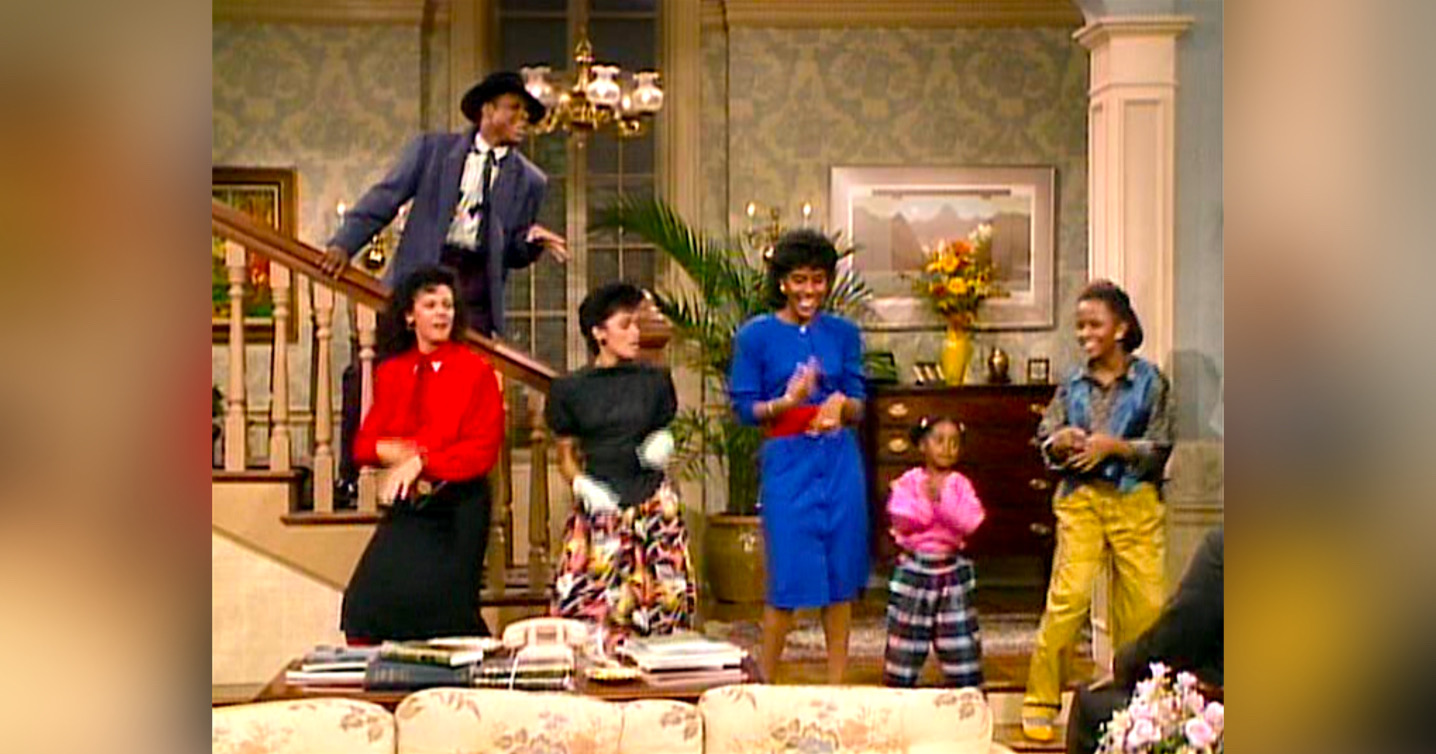
That song? Ray Charles’ “Night Time Is the Right Time” — a rollicking, bluesy soul number the Huxtables famously lip-synced to in an unforgettable second-season episode. The scene: a surprise 50th-anniversary tribute to Cliff’s parents. Theo, descending the staircase and embodying Charles’ lead vocals, was flanked at the landing by his mother and sisters doing the Raelettes’ coordinated dance routine. Admittedly, while Warner’s version of Ray was compelling, it was baby sister Rudy (Keshia Knight Pulliam) who stole the moment — and our hearts — with her dead-on reenactment of Raelette Margie Hendrix’s gospel-fueled solo.
As joyful as that performance was — and as deeply embedded in pop culture memory (it ranked in 1997 among TV Guide’s 100 most popular moments in TV history) — the song itself is surrounded by a surprising amount of tragedy. Warner’s death now adds yet another layer to its complicated legacy.

Margie Hendrix, Ray Charles’ electrifying duet partner on the 1958 recording, fell into a devastating spiral of drug and alcohol addiction following a tumultuous relationship with Charles, who fathered her son while married to his second wife. Fired from the Raelettes in 1963 after a brutal confrontation with Charles, Hendrix’s solo career never took off. She died in 1973, reportedly from a heroin and alcohol overdose, at the age of 38.

The song’s original co-writer and performer, Nappy Brown (born Napoleon Culp), never found chart success with it himself when it was released in 1957 a year prior to Ray Charles’ version. Though Brown still made a name for himself as a blues pioneer, his career had ups and downs. Yet he remained a respected figure in music, hailed as one of the genre’s last great blues shouters. In 2008, Brown fell ill while just beginning a performance at New Jersey’s Crawfish Festival and was immediately hospitalized. He remained under a doctor’s care until he passed away peacefully three months later in his hometown of Charlotte, NC, at age 78.

Another famous Brown — the Godfather of Soul, King James — also recorded the tune in 1983 as part of a career reboot. His version, subtitled “To Be With the One That You Love,” only reached No. 73 on Billboard’s R&B chart. Brown would die on Christmas Day 2006, two days after visiting his dentist for implant work. The dentist, upon seeing a gaunt and frail Brown, directed him instead to see a physician. Though a late diagnosis of pneumonia and congestive heart failure largely went untreated due to Brown’s own reluctance, the sudden and mysterious nature of his death — and the fact that no autopsy was performed — led to years of speculation, including claims by a former associate that Brown was murdered and that his body was missing from its crypt. The claims were never proven.
And then there was Ray Charles himself, the blind genius whose version was the immortal one. It hit No. 5 on the R&B chart in 1959 and No. 95 on the Hot 100, a low showing but one that predated the immense career success that would come just months later. Like the two Browns above, Charles performed until the end of his life, passing away in 2004 from liver failure. Ironically, he didn’t live to see the full triumph of Genius Loves Company, the posthumous album of duets that topped the Billboard 200 later that year and won eight Grammy Awards in 2005, including Album of the Year.

But Charles, Nappy Brown, and James Brown all lived to see their 70s, performing right up to the end, and leaving us musical legacies that can’t be easily forgotten or denied. Malcolm-Jamal Warner — ironically now the more beloved of the two lead actors portraying Huxtable men — never made it to 55, a life cut short by the cruelest of tragedies.
Another irony is that it was Warner who, with just a few perfectly timed facial expressions and smooth steps down a staircase, helped bring “Night Time Is the Right Time” to an entirely new generation. He turned a black-and-white soul classic into a Technicolor family moment — a scene replayed for decades since its 1985 debut. In doing so we never thought of Theo as mortal, and by extension that same sentiment was extended, unrealistic as it was, to the actor who portrayed him.
Warner’s career went far beyond Theo. He starred in later sitcoms like Malcolm & Eddie and Reed Between the Lines, made numerous appearances in films and television dramas, and even released spoken-word poetry and music. But for many of us, it will be that one episode — full of joy, family, and rhythmic perfection — that defines the spirit he brought to millions.
And now, in a week when a viral kiss cam video or “rumours” of a reunion can cause spikes in a band’s streams, maybe it’s time to revisit the song Warner helped reintroduce to the world — especially given its bittersweet past. Maybe we can let “Night Time Is the Right Time” be the soundtrack to this moment of remembrance.
Rest well, Malcolm-Jamal Warner. And thank you for giving us a performance that never needed sung words to speak volumes.
—DJRob
DJRob (he/him) is a freelance music blogger from the East Coast who covers R&B, hip-hop, disco, pop, rock and country genres – plus lots of music news and current stuff! You can follow him on Bluesky at @djrobblog.bsky.social, X (formerly Twitter) at @djrobblog, on Facebook or on Meta’s Threads.
You can also register for free (select the menu bars above) to receive notifications of future articles.