


Drake is Leading Projections for Next Week’s Charts; Final Billboard Placements Are Not Official Until Billboard Publishes Them
(May 22, 2026) – Drake is about to do what Drake has often done: flood the zone with content, bend Billboard to his will, and dare history to keep up.
With three new albums – Iceman, Habibti, and Maid of Honour – expected to overrun next week’s Billboard charts, the Toronto rapper may soon own another stack of records that look historic on paper. But paper, as we’ve learned in the streaming age, can be very forgiving to artists of Drake’s stature. The question isn’t whether Drizzy can dominate the charts. He can. He Has. He probably will again.

The question is whether dominance still means greatness when it arrives three albums and 43 tracks at a time. If projections hold up, Drake’s albums will occupy the top three slots on the Billboard 200, while the songs from it will blitz the Hot 100. Fifteen of the songs are expected to dominate the top 20, with “Janice STFU” expected to top the chart.
And honestly? None of that is surprising anymore. At this point, Drake doesn’t release albums so much as launch streaming campaigns. That distinction matters because while next week’s expected domination will undoubtedly produce eye-popping headlines and yet another avalanche of records for the superstar, it also raises an increasingly unavoidable question about Drake’s legacy in this era: when the objective becomes occupying as much chart real estate as possible, does the music itself eventually become unnecessary?
To wit, the law of averages means that – among 43 new songs – there are bound to be some duds. In this case, there are several. Drake can’t seem to get out of his own way with his trademark paranoia, his me-against-everyone-else mantra, his numbers-based boasts about his position in the game, and those overused beat switches (there are 16 spread across the 43 songs).
But that same law dictates that there are some good songs across the three albums as well. For example, the four-song sequence comprising Iceman’s “Janice STFU,” “Ran to Atlanta” (before its beat switch), “Shabang” (before that weird ending), and “Make Them Pay” (the Deniece Williams sample is sublime) are as good as any hip-hop has offered so far in 2026. “Janice” and “Make Them Pay” particularly address several of Drake’s beefs (yes, including that one – albeit two years late) and do it reasonably well (albeit not to the point of total redemption).
But they’re immediately preceded by some of the year’s worst hip-hop (“Whisper My Name”) and, quite frankly, only diehard Drake fans will be banging these tracks past July. Many, if not all of them, will be off the Hot 100 before then.
The timing and symbolism of all this is especially ironic.
As Michael Jackson’s post-biopic resurgence continues to dominate pop culture conversations, Drake now appears poised to eclipse one of the King of Pop’s most cherished chart milestones among solo male artists – most No. 1 Hot 100 singles. “Janice” will be Drake’s 14th against Michael’s 13 (his last being “You Are Not Alone” when Drake, 39, was just eight).
But history demands context.
Jackson earned those numbers in an era when artists released one chart-eligible single every few months from albums that, in the King of Pop’s case, were released every four to six years. And Michael’s albums rarely contained more than nine or ten new songs per release.
Drake, meanwhile, is operating in the streaming era’s volume economy, where dropping dozens of tracks at once practically guarantees chart saturation regardless of whether listeners truly connect with most of the material long-term. That isn’t Drake’s fault. He’s operating within the system. Taylor Swift does it, so does Morgan Wallen – both of whose records Drake is aiming to eclipse with next week’s Hot 100 penetration. But pretending the MJ-vs.-Drake numbers exist in identical environments is like comparing NBA scoring totals from the hand-check era to today’s pace-and-space game without acknowledging the rule changes.
And then there’s that unironic Iceman cover.
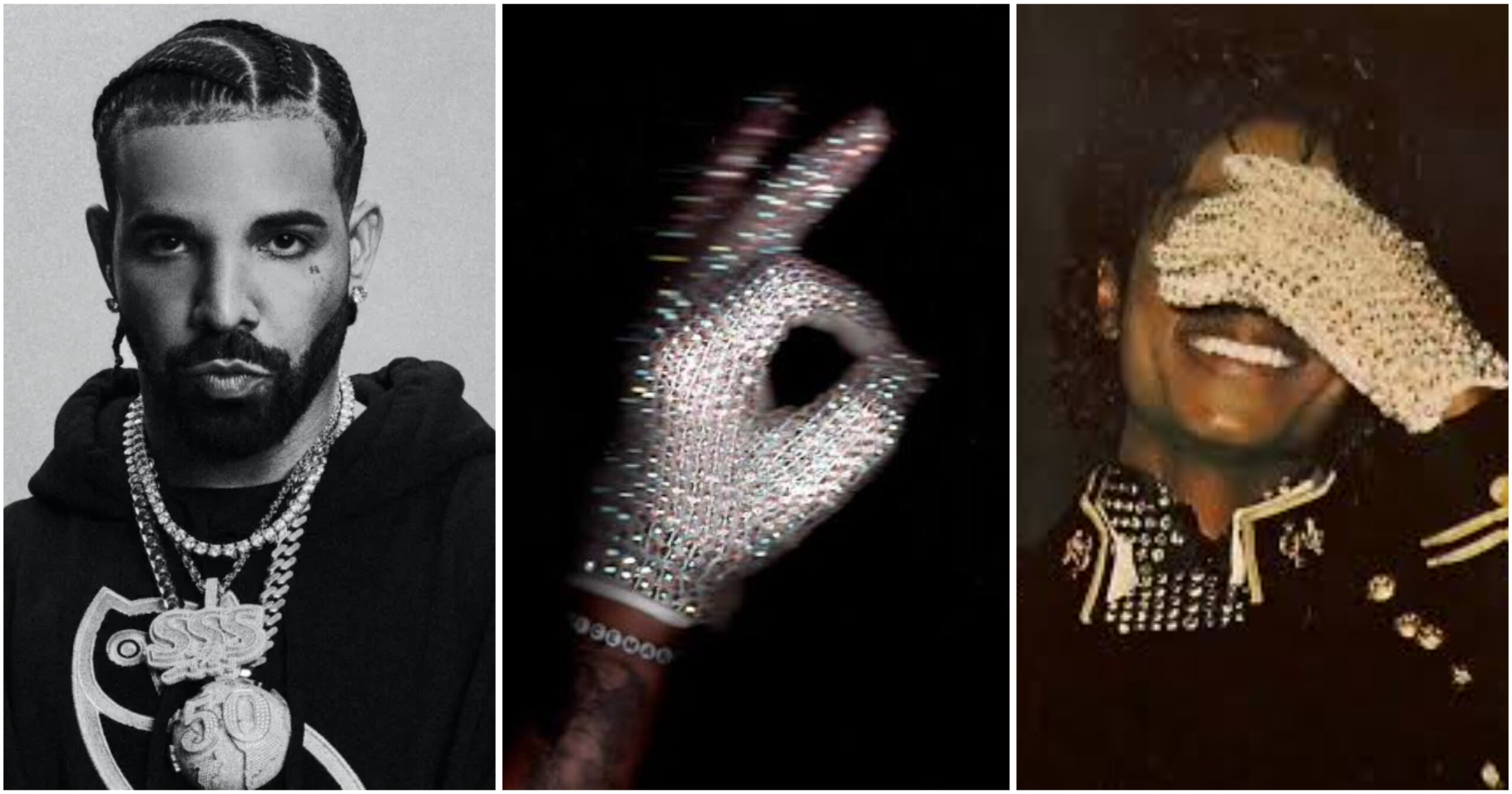
While Iceman’s single sequined glove immediately evokes Michael Jackson imagery – an intentional move that Drake reportedly paid six figures to secure – the rapper is clearly scoreboard watching. It lands at the precise moment Drake is overtaking MJ in that Hot 100 statistical category. It also comes as Drizzy is expected to eclipse Jay-Z for Billboard 200 chart supremacy among rappers and male solo acts, with Iceman becoming Drake’s 15th No. 1 album (against Jay-Z’s 14). And Drake will be tied with long-time chart rival Taylor Swift, who achieved her 15th No. 1 album with last year’s The Life of a Showgirl.
What makes this funny is that Drake thumbs his nose up at Billboard numbers on one Iceman track “Make Them Remember” – an attack on both Kendrick’s “Not Like Us” and their common label Universal Music Group – while acknowledging his chart-watching ways on another, “Shabang” (“Don’t even recognize none of these names at the top of the charts, I looked…”). And as Drake reminds us on the album’s “Firm Friends“: “Y’all don’t know the stamina it takes to run up the stats. My numbers are humblin’ facts.”
Humbling facts indeed, but for whom?
Becoming bigger statistically is not the same thing as being a multigenerational cultural icon. If chart totals alone determined artistic greatness, then artists like Lil Wayne, Future, Nicki Minaj, 21 Savage, and NBA YoungBoy – all of whom benefitted enormously from the streaming era’s chart mechanics – would automatically rank above pre-streaming royalty like Aretha Franklin, Stevie Wonder, and James Brown.
Few serious music fans would argue that. The same holds true for Drake vs. Michael.
Drake’s 43 songs vs. the Era’s Singular Moments…
Even among his peers, Drake’s three albums and 43 songs do little to alter the narrative of the past two years… the narrative that Kendrick needed just one song – “Not Like Us” – to effectively end the historic battle between the two rappers, at least in the court of public opinion.
And therein lies the difference between Drake and his “competition.” Kendrick weaponized one song into a major cultural event (whether one believes Drake’s assertion of unfair meddling by his label, notwithstanding). Michael Jackson currently rules the Billboard Global 200 with one song – “Billie Jean” – a classic beloved by countless generations. Drake has instead created an avalanche of content. Yes, a few tracks stand out and remind listeners why Drake became Drake in the first place.
But classics? You’re much more likely to find those beat switches.
The Bottom Line:
Drake may enter next week with the top three albums, the top three songs, and another rewritten page in Billboard’s record book. But history has a funny way of separating achievements from moments. Numbers can prove that an artist was everywhere. They cannot prove that the music mattered everywhere.
Michael Jackson has “Billie Jean.” Kendrick had “Not Like Us.” Drake, increasingly, needs the whole chart.
DJRob
DJRob (he/him) is a freelance music blogger from the East Coast who covers R&B, hip-hop, disco, pop, rock and country genres – plus lots of music news and current stuff! You can follow him on Bluesky at @djrobblog.bsky.social, X (formerly Twitter) at @djrobblog, on Facebook or on Meta’s Threads.
You can also register for free by selecting the menu bars above to receive notifications of future articles.
Wow, very thorough and in depth — gives us a great look at the facts on not the fiction, as usually follows along with these “”big” releases by someone of Drake’s stature and accomplishments. As you so clearly explaine, quantity doesn’t ensure quality. Personally, I think three albums at once is overkill, you’re insuring there will be a number of failures — even of some good material. We’ll see how it all plays out.
Thanks, Robert. Releasing 43 songs on three albums is less a testimony to one’s greatness as it is to his greed. It’s always been about settling scores and getting numbers for Drake.