


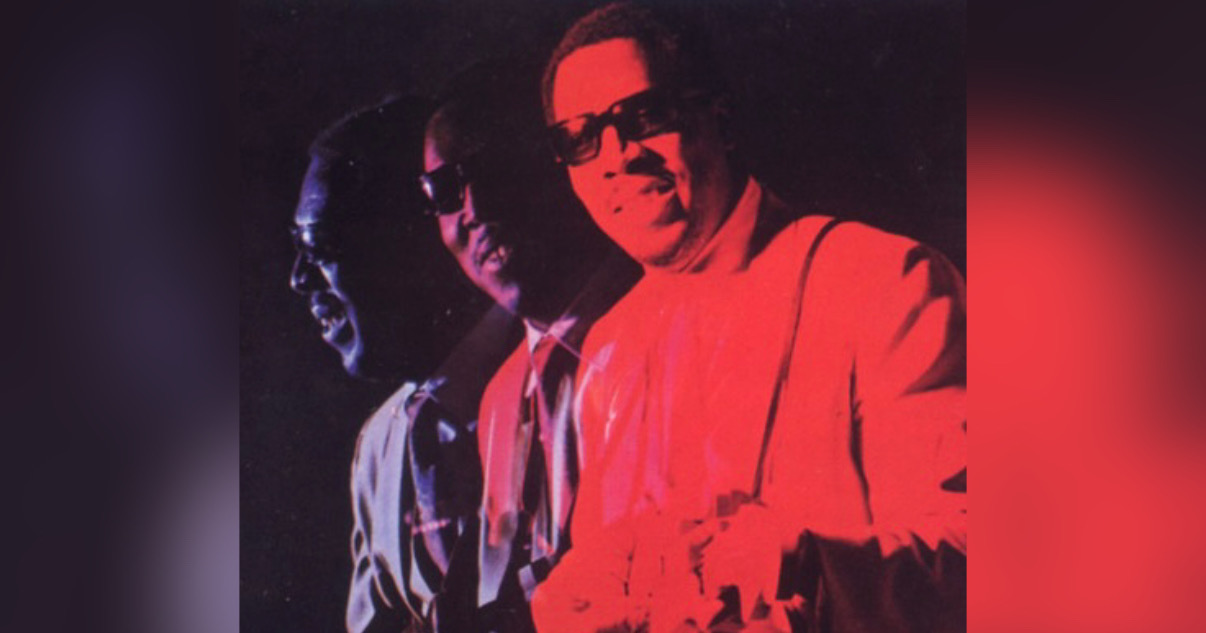
(May 18, 2026) – I was about four years old when I first heard the song “Patches” by Clarence Carter. Even at that tender age, I knew it was depicting a very sad story about a scenario I prayed I’d never experience: the prospect of losing both parents while still not yet a man.
Too young to discern truth from fiction, especially in art, I imagined that what this singer who was seemingly on the verge of tears was describing was real, born out of his personal experience of having to grow up fast after losing his father, and soon thereafter burying his mother, while looking after his younger siblings.
That was the conviction that Clarence Carter poured into the story, one that his dramatic, blues-drenched vocals made believable. His was a performance so emotional that it compelled fans of both pop and soul music to buy what Carter was selling. That poor man’s narrative about poverty, loss and growing up fast ultimately reached No. 4 on the pop chart and No. 2 soul, selling a million copies in the process.
I didn’t know at the time, but “Patches” was Carter’s third million-selling single after the even more bluesy “Slip Away” (also top ten on both charts) and “Too Weak to Fight,” a mid-tempo soul number that saw Carter drawing some of music’s earliest medical metaphors about the effects of a love gone bad. In fact, “Patches” had been Carter’s twelfth soul chart entry after more tongue-in-cheek titles like “Tell Daddy,” “Looking for a Fox,” “Take it Off Him and Put It On Me,” and “Snatching it Back.”

But my reintroduction to Carter — after “Patches” — came via a song he’d recorded two years earlier. First heard as the opening track on the famous Soul Christmas album my mom had in her collection, “Back Door Santa” filled our living room during my early Christmas seasons and even during non-holiday periods. My parents would host gatherings and play that song constantly. All the adults in the room would laugh. I’d listen and laugh right alongside them, not fully understanding what we were all laughing about. My four-year-old mind had convinced me it was about the way he slyly threw in a “ho, ho, ho” here and there.
Years later, I’d come to know what all those metaphors were about. “Back Door Santas” weren’t exactly in the habit of making themselves known by ringing the front doorbell. More pointedly, Carter’s take had him “making all the little girls happy” while the “boys were out to play.” But this seedy Santa wasn’t all that bad. At least he was nice enough to keep “a little change” in his pocket to give the kids so they would run off while he and “mama” enjoyed some adult time. Interestingly, and perhaps for the better in our household where I’d play the record on repeat, the album version we had didn’t include references to Santa having a “mean old sack” that I later came to hear on alternate versions of the song. I can only imagine how that would have amplified the laughter in our living room.
As I got older and the novelty of that Soul Christmas classic faded, I heard little else from Carter. By then, my musical tastes had expanded to include years of pop, soul, disco, and hip-hop classics, and Carter’s bluesy contribution had slipped from my mind.
Then in late 1986 he suddenly reappeared in my world. Carter, who’d never stopped recording after his 1960s and early ‘70s success, had become fascinated by the technological advances of the mid-1980s. Synthesizers and programmed tracks made recording easier and cheaper than in previous decades. Armed with that knowledge, Carter — blind since infancy — set out to craft what would become his last major musical statement.
And what a statement it was.
The song was “Strokin’,” Carter’s wildly risqué celebration of libido, swagger, and grown-folks business — not entirely removed from the themes he’d hinted at years earlier in “Back Door Santa.” But where “Santa” relied on sly innuendo, “Strokin’” practically kicked the bedroom door off its hinges.
Part braggadocious anthem (“I be strokin’!”), part audience participation exercise, the song found Carter grilling listeners about their own romantic habits while proudly detailing his.
Needless to say, mainstream radio in the 1980s wanted no parts of it.
The powers that be weren’t about to add a song featuring lyrics like “I be strokin’ to the woman that I love the best” — especially when the uncensored version tossed in sly references to oral and anal sex for good measure. So Ichiban Records, the fledgling independent label that took a chance on Carter after his stints with Fame, Atlantic, and ABC, got creative. Instead of relying on radio, the label serviced “Strokin’” directly to jukeboxes in bars throughout the South, where it spread like wildfire and became a cult phenomenon.
Even with growing popularity, most radio stations stayed far away from the record, especially after warning labels appeared on the 45 rpm single cautioning buyers that it contained “explicit material.”
As a result, one of Carter’s signature songs failed to chart on Billboard’s Hot 100 or Hot Black Singles chart. Yet “Strokin’” still became a genuine cultural phenomenon, reaching No. 6 on Jet’s Top 20 Singles chart — likely because Jet, unlike Billboard, wasn’t dependent on radio airplay reports.
And chart peak or no chart peak, “Strokin’” ultimately secured something bigger: immortality. Nearly four decades later, it remains one of southern soul’s most recognizable party records — proof that Clarence Carter could still command attention long after his commercial peak.
And so, with Clarence Carter’s passing on March 13 at age 90, another towering figure from soul music’s most emotionally raw era is gone.
Carter occupied a unique lane in Black music history. He could devastate listeners with tales of hardship and heartbreak, then turn around and make those same audiences laugh with songs filled with wink-wink humor, double entendres, and unapologetic grown-folks storytelling. Few artists balanced tragedy and comedy so naturally. Fewer still made both feel equally authentic.
Whether he was crying through “Patches,” slipping into the bluesy ache of “Slip Away,” sneaking through chimneys and back doors during Christmas season, or proudly asking listeners if they liked to “stroke,” Clarence Carter always sounded believable. That was his gift.
For many fans like me, Carter’s music became woven into memories of childhood, family gatherings, laughter-filled living rooms, jukeboxes, and the soundtrack of Black America across multiple generations.
Clarence Carter made us cry. Then he made us laugh. Then laugh harder once we finally understood the jokes.
And that’s a legacy few soul singers will ever match.
DJRob
DJRob (he/him) is a freelance music blogger from the East Coast who covers R&B, hip-hop, disco, pop, rock and country genres – plus lots of music news and current stuff! You can follow him on Bluesky at @djrobblog.bsky.social, X (formerly Twitter) at @djrobblog, on Facebook or on Meta’s Threads.
You can also register for free by selecting the menu bars above to receive notifications of future articles.
This is a very nice and heartfelt tribute to an artists who never got much credit outside the black commiunity for his contribution to music overall. I’m from a middle class white family who, thankfully, listened to Soul, R&B, gospel, and funk so we had a lot of music in our house some of my white friends didn’t until they got older and chose their own music. Clarence Carter was improtant to music, period.
Yes he was! Thanks for commenting and continuously supporting, Robert!