


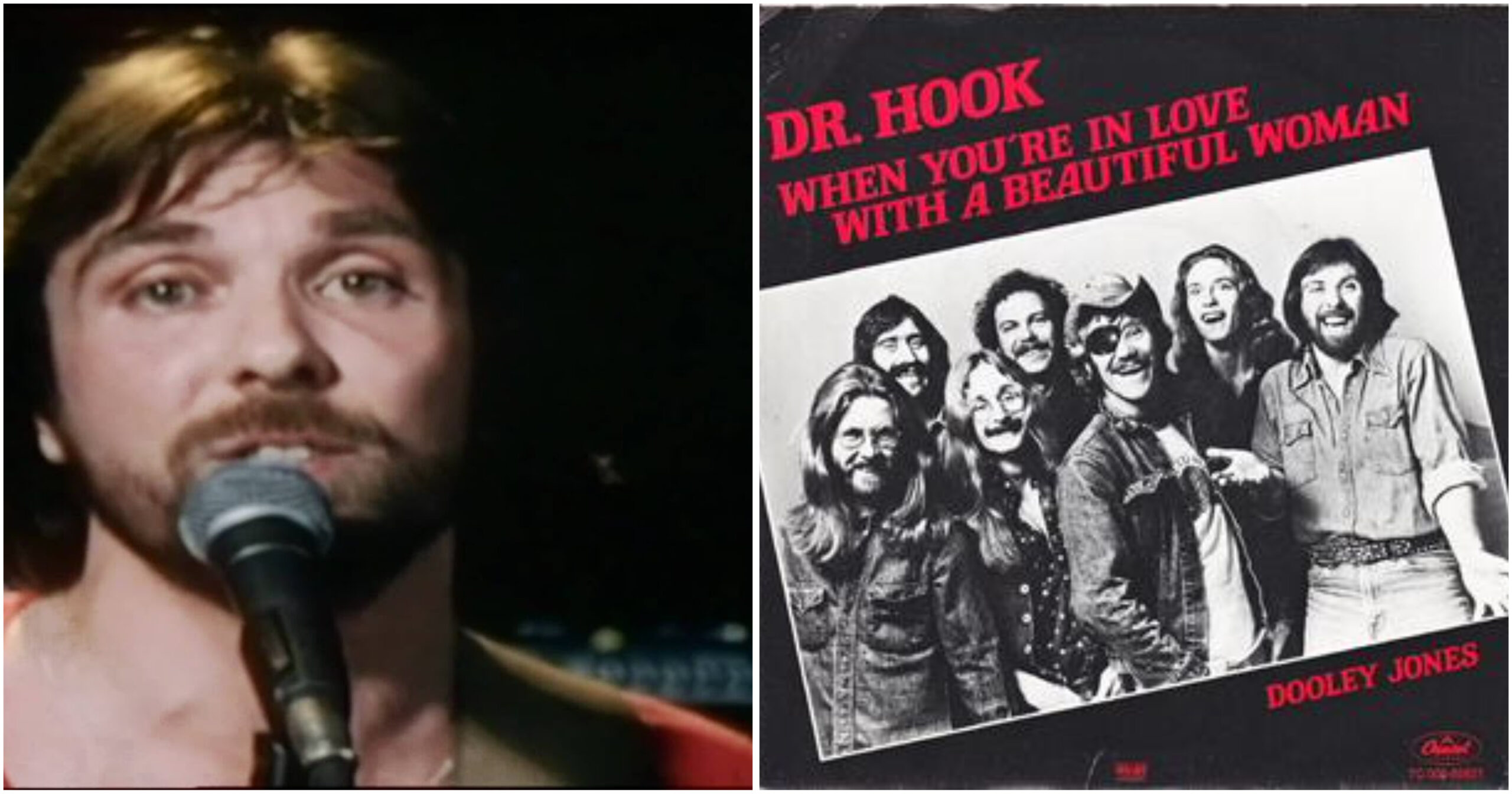
(May 20, 2026) – There are probably more dignified ways to pay tribute to Dennis Locorriere, the soulful lead singer of Dr. Hook who died Saturday at 76, than admitting what my 13-year-old self thought one of his biggest hits was really about.
But honesty demands it.
In 1979, while “When You’re in Love With a Beautiful Woman” climbed the Billboard Hot 100 on its way to No. 6, my adolescent brain — assisted by an equally immature younger brother and the general condition known as being a new teenage boy — became convinced the song’s repeated refrain, “it’s hard,” carried meanings far beyond romantic insecurity.
To make matters worse, the line “you go it alone” didn’t exactly help matters in the imagination department.
Of course, none of that was remotely what the song was about. But once your 13-year-old brain latches onto something, good luck convincing the adult version to completely let it go.
Yet beneath all my juvenile reinterpretation was something undeniable: Dennis Locorriere could flat-out sing.
“When You’re in Love With a Beautiful Woman” wasn’t novelty music, even if Dr. Hook’s image and earlier catalog (“Cover of Rolling Stone”) often leaned playful and irreverent. The record was actually a beautifully constructed country-pop song dipped lightly in a soft disco arrangement, delivered with just enough grit and vulnerability to work across multiple formats.
Country fans heard heartbreak and took the song to No. 68 on Hot Country Songs. Pop fans heard melody and made it the band’s fifth million-selling hit. Adult contemporary listeners heard sophistication. And teenage boys — or at least this one — apparently heard… other things entirely.
The song became one of six Dr. Hook singles to reach the Billboard top ten, and oddly, every one of them peaked at either No. 5 or No. 6 on the Hot 100. Even more impressive, all six were million sellers — remarkable consistency for a band often remembered more for personality and novelty than sustained chart success.
Locorriere’s baritone was central to that success. Warm, raspy, soulful, and instantly recognizable, he gave Dr. Hook records emotional weight beyond the humor and swagger.
Over time, Dennis Locorriere became the last major torch bearer for a group that occupied a strangely unique lane in 1970s pop culture — equal parts country, soft rock, AM gold, bar-band looseness, and wink-at-the-camera humor.

For me, Dr. Hook’s music became tied not just to radio memories, but to that awkward bridge between childhood innocence and adolescence — when songs suddenly took on new meaning, jokes became dirtier, and your brain started finding double entendres where none existed. After all, even the band’s name was derived from the character in the Peter Pan fairytale (or was it?).
And somehow, every time I heard “When You’re in Love With a Beautiful Woman,” Dennis Locorriere’s wonderfully soulful vocal sat right in the middle of all of it.
Years later, I eventually understood what the song was actually saying: that loving someone beautiful can make a person insecure, suspicious, possessive, and vulnerable. The O’Jays had masterfully explored this same paranoia with their earlier ‘70s hit, “Back Stabbers.”
But even armed with adult wisdom, I still can’t hear certain lines of the Dr. Hook hit without mentally reverting to that snickering 13-year-old kid in 1979. Even today as I played the song on repeat about six times, I chuckled as the female background singers subliminally chirped “it’s hard, you know it gets so hard.”
Honestly, Dennis Locorriere probably would’ve laughed at that.
And maybe that’s part of the reason Dr. Hook’s music endured. Beneath the polished melodies and hit records was a band that never seemed afraid to be human — sentimental one minute, mischievous the next.
Just as I matured, so did Dr. Hook. The band evolved from their early ‘70s quirky Shel Silverstein songs like “Sylvia’s Mother” and “Cover of Rolling Stone” to the sleek, soft-rock of songs like “Sharing the Night Together” and “Sexy Eyes.” Locorriere’s lead vocals were one of the key reasons they successfully made that transition without losing personality. His voice grounded both eras.
Rest in peace to the voice behind one of my all-time favorite songs… and one of my favorite embarrassments.
Dennis Locorriere (1949 – 2026)
DJRob
DJRob (he/him) is a freelance music blogger from the East Coast who covers R&B, hip-hop, disco, pop, rock and country genres – plus lots of music news and current stuff! You can follow him on Bluesky at @djrobblog.bsky.social, X (formerly Twitter) at @djrobblog, on Facebook or on Meta’s Threads.
You can also register for free by selecting the menu bars above to receive notifications of future articles.
Though I like Dennis Locorriere’s voice — a lot — after their intial hit “Sylvia’s Mother,” which I love, I didn’t care much for anything else I heard by the band. I don’t believe in “bad” music, just music you don’t like or that doesn’t reach you. I did not and it did not. But man, what a voice. RIP, Dennis.
Yeah, that’s understandable. His voice had a certain yearning and pain to it. Definitely made those songs into hits.