


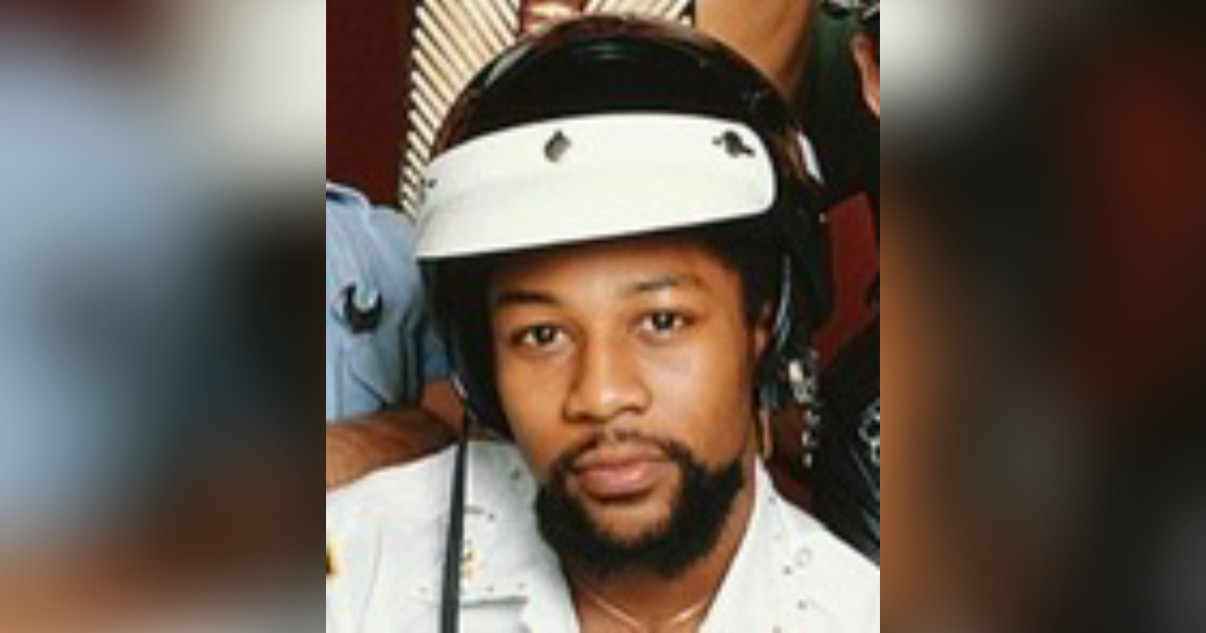
(July 1, 2026) – As Black Music Month and Pride Month drew to a close, so — perhaps poetically, perhaps symbolically — did the life of Victor Willis, the on-and-off-and-on-again frontman and principal songwriter of the Village People, who died June 30 — reportedly following a brief illness. Today (July 1) would have been his 75th birthday.
Few artists occupied the intersection of Black music and LGBTQ culture quite like Willis and his group, even if he spent much of his later life resisting one half of that legacy while the other half — on the soul charts at least — never fully embraced the Village People.
As the group’s lead singer and chief songwriter, Willis helped craft some of disco’s most enduring crossover anthems, including “Macho Man,” “In the Navy,” and, of course, “Y.M.C.A.” Their music became synonymous with disco’s commercial peak before suffering an equally dramatic decline as the anti-disco backlash swept across America in late 1979.
But while disco faded, “Y.M.C.A.” never truly did.
The song found repeated new life through films, sporting events, weddings, and the instantly recognizable dance in which crowds form the letters of its title with their arms. More recently, it became inseparable from Donald Trump’s political rallies, serving as the soundtrack to his now-famous air-punching dance and introducing the 1978 hit to an entirely new generation (and culture).
That unlikely pairing remains one of popular music’s more fascinating contradictions.
For decades, “Y.M.C.A.” had been widely embraced as a celebration of gay culture, despite Willis’ repeated insistence that it was never intended as a gay anthem. He emphatically rejected that interpretation in later years and even threatened legal action against those who characterized the song that way.
Yet the record ultimately became something much larger than its creators’ stated intentions, a reflection of the broader truth about art. Think of “Born in the U.S.A.” being interpreted as a patriotic anthem despite its protest-leaning lyrics, or “Every Breath You Take” being used as a wedding song despite being less about love and more about obsession and possession. Once a work enters the zeitgeist, audiences often give it meanings its creator never intended. If Willis was being true, “Y.M.C.A.” is one of the clearest examples of that phenomenon.
Its association with Trump only deepened the paradox. A song long embraced by LGBTQ audiences had become the rallying cry of a political figure whose appeal to the manosphere and themes of hyper-masculinity helped propel him back to the White House. The contradiction became even more striking when Village People performed “Y.M.C.A.” at Trump’s pre-inauguration festivities in early 2025. Willis insisted the appearance was an act of patriotism rather than partisanship, while maintaining that neither he nor the group was endorsing Trump or his policies.
Ironically, even if Willis denied that “Y.M.C.A.” was a gay anthem, he unquestionably wrote one.
That song was “Go West,” the title track from Village People’s 1979 album and the follow-up single to “In the Navy,” which stalled at No. 45 on the Billboard Hot 100 just one week before Disco Demolition Night became the defining symbol of disco’s collapse.
Unlike bigger hits “Macho Man,” “Y.M.C.A.,” and “In the Navy,” which merely flirted with themes of male camaraderie, “Go West” embraced them head-on. Repurposing the famous 19th-century rallying cry, “go west, young man,” the song transformed “Go West” into an invitation for men seeking acceptance, with the “West” widely understood as a reference to San Francisco — then the vibrant epicenter of the modern gay rights movement.
Lyrics such as “there where the air is free” and “we will do what we want to do” became a triumphant call for young gay men to leave intolerant hometowns, live authentically, and build new communities where they could finally belong. Further cementing this, The Pet Shop Boys — the LGBTQ community’s biggest pop music ambassadors — refashioned the song into a huge dance hit in 1993.

The Village People’s theatrical costumes, exaggerated masculinity, infectious dance rhythms, and unabashed camp made the group one of disco’s defining acts while simultaneously cementing its place within gay culture. Yet, while disco was rooted in Black music, the group’s qualities gave them a broader mainstream pop following than a Black audience. Every Village People single charted higher on the Billboard Hot 100 than on the magazine’s soul chart.
Willis’ later efforts to distance both himself and “Y.M.C.A.” from LGBTQ symbolism led many to view him as dismissive of the community that had embraced the song for nearly half a century. Whether or not that reflected his intent, the reality remained that “Y.M.C.A.” had long since transcended authorial ownership. It became an anthem because millions of people made it one.
Likewise, when the anti-disco movement exploded in 1979, much of the backlash was directed at music many critics and fans viewed — fairly or unfairly — as being too Black, too gay, or both. Village People found themselves squarely within that cultural crossfire.
That is what makes the timing of Willis’ passing feel unusually poignant. As Black Music Month and Pride Month ended together on June 30, so too ended the life of one of the most recognizable figures to emerge from both traditions — a man whose greatest songs helped define each, even as he spent much of his later years reluctant to fully embrace one of them.
History often remembers artists not only for what they intended, but for what their music ultimately came to mean. Few songs illustrate that truth better than “Y.M.C.A.,” and few careers embody its complexity more than that of Victor Willis.
May he R.I.P.

Victor Willis (July 1, 1951 – June 30, 2026)
DJRob
DJRob (he/him) is a freelance music blogger from the East Coast who covers R&B, hip-hop, disco, pop, rock and country genres – plus lots of music news and current stuff! You can follow him on Bluesky at @djrobblog.bsky.social, X (formerly Twitter) at @djrobblog, on Facebook or on Meta’s Threads.
You can also register for free by selecting the menu bars above to receive notifications of future articles.
1979 was an iconic year in my childhood. The Village People was a representative group that maintained its attraction by appealing to multiple demographics. Like the Sesame Street song goes…these are the people in our neighborhood (lol). A cop, a construction worker, an Indian chief and a cowboy held my attention like an episode of the Lone Ranger or Gunsmoke. The human psyche idealizes the macho man image and stereotypes it in relation to the gay demographic. I think timing was on point as the feminist movement seemed to reduce masculinity by inducing feminine characteristics i.e. longer hair, tighter clothing, unisex stylings. At this point in larger society, its refreshing to see a return to masculinity minus toxic wranglings. The Village People promoted that we still had masculine macho images as representations of manhood. If that’s gay, then so be it. Hyper masculine images in a lot of ways saves manliness. I always wanted to be the motorcycle cop. In my childhood head…Cool!
Interesting perspective!