


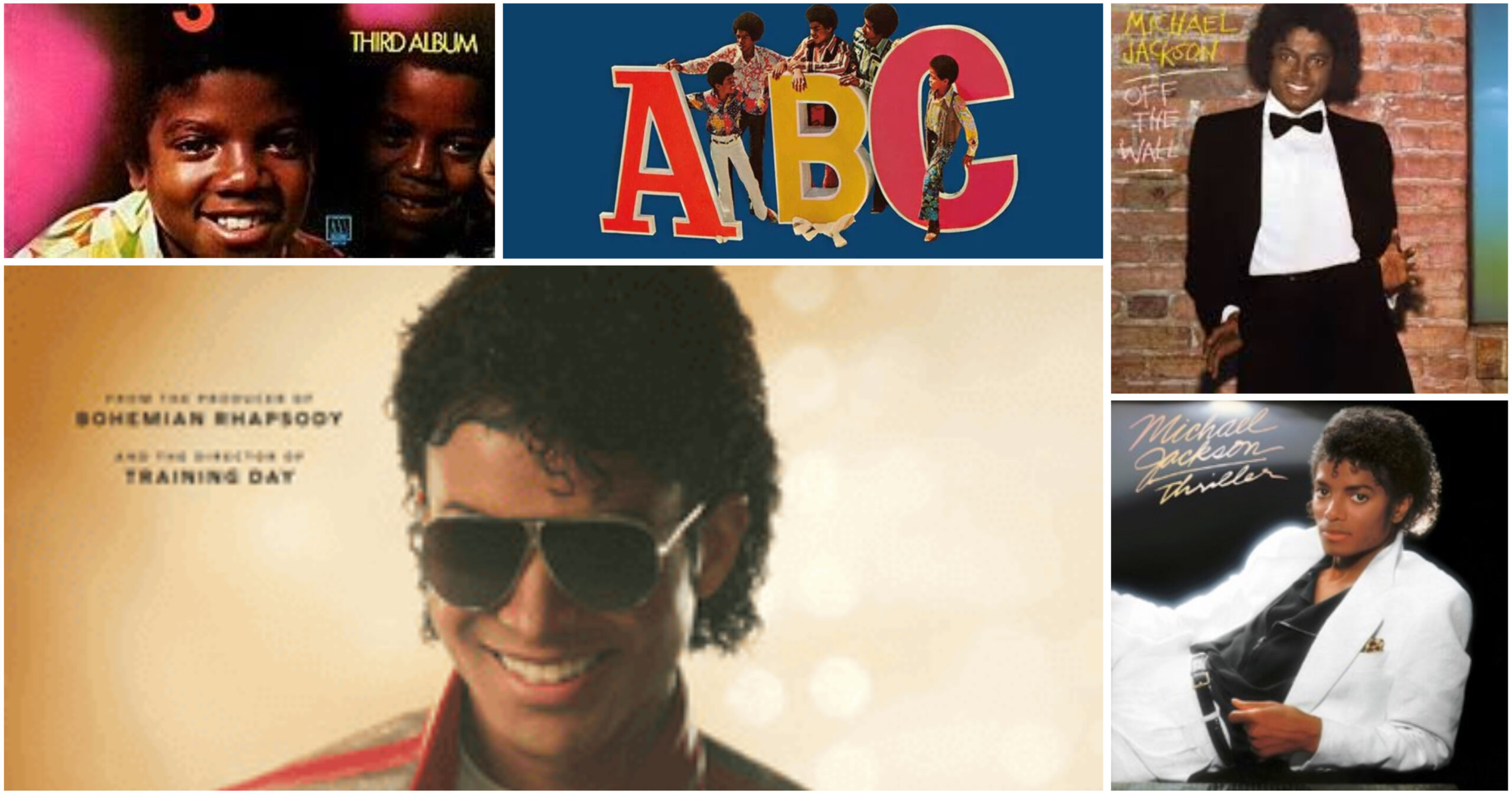
The Fans Were Right…and So Were the Critics!
(April 25, 2026) – I saw the Michael biopic on Friday (the 24th) and let’s just say it has something for everyone. (Spoiler alert: reading further will reveal key parts of the movie, but then you already know Michael’s story and everything discussed below.)
For movie critics, it’s a chance to air all their grievances about the late King of Pop and his headline-grabbing family members, many of whom either served as executive producers (Jermaine, Jackie, Tito, Marlon, La Toya, and Michael’s oldest son Prince) or were left out of the film altogether (Janet, Randy and Rebbie, along with Michael’s other children—Paris and Blanket).
For longtime fans, it’s a chance to relive musical memories and be entertained by spot-on reenactments of Jackson’s iconic videos and stage performances — like the Motown 25 anniversary special in 1983 or Michael’s live solo performance during the Bad Tour in 1988 — courtesy of nephew Jaafar Jackson who played his uncle and did an incredible job mimicking Michael’s speaking voice and dance moves.
For newer fans it’s an opportunity to be introduced to some of Jackson’s legendary song catalog — or at least the first two decades of it — in one sitting.
And for a devoted fan and blogger like yours truly, it’s a chance to take all of it in. And while I was entertained by the music — especially the producers’ ability to leverage AI and isolate Michael’s vocal tracks while reimagining what the creative processes must have been like — I was also disappointed by several key aspects of the movie.
First is the fact that no two-hour film could ever do Michael’s legacy justice. It’s unfair to expect otherwise. There’s just no way to squeeze 40 years of his far-too-complex life into 127 minutes of tape. In fact, it’s practically impossible to do justice to the 23 years the film does cover — from 1966-1988 — which take us from an adolescent Michael practicing with his brothers under the watchful eye of their domineering father through his rise to international fame and the culmination of his Bad tour at Wembley Stadium in London.
Good Acting, Bad Script
Then there’s the acting. While the actors portraying the three main characters — Jaafar as Michael, Colman Domingo as father Joseph, and Nia Long as mother Katherine — do commendably well, sadly none of them gives an Oscar-worthy performance. And it’s less about their acting than the material they had to work with. Their characters aren’t given much, if any, depth. The script reads too much like it was mined from well-worn headlines or a Wikipedia page.
Father Joseph comes across as an ugly bully whose main purpose is to pick on Michael — as if he was the only Jackson sibling their father took a belt to when needed. Instead of the handsome man Joe once was, Domingo portrays him as sloppy and monster-like in appearance, always looking as if he’d tied on one too many the night before.
Matriarch Katherine is, expectedly, the movie’s most likable character. Long does a good job bringing out the motherly instincts that have been well documented through the years. Still, you get the impression that she’s only there to serve as Joe’s foil, not be a mother to the nine children they shared.
The Jackson Siblings are Poorly Portrayed
Then there’s the other children, only five of whom are portrayed in the film. While they were a major part of Michael’s childhood, his siblings are given few speaking roles and zero personality. The four older brothers — Jackie, Tito, Jermaine and Marlon — are barely distinguishable. At various points when one walks into Michael’s room to inform him that Joseph has called a meeting, you have no idea which brother that was. Also, are we to really believe that these brothers — in their late 20s and early 30s and all married with children during the early ‘80s — were really hanging around the Hayvenhurst mansion being treated like teenagers as depicted at one key point in Michael?
And La Toya’s character is a study in total revisionism. In reality, especially during the late 1980s, the middle child was becoming increasingly estranged from the rest of the family. Because of that, she was the only sibling not included in their 1989 family tribute single “2300 Jackson St.,” which featured (incredibly at the time) both Michael and Janet. Yet, in Michael, as the lone sister portrayed, she comes across as loving and empathetic throughout (that may have had to do with her status as co-executive producer).
A Shallow Depiction Even for its Timeline
The film is also a very shallow depiction, perhaps made necessary by its short two hours. Yes, there are glimpses into the creative processes of Off the Wall (specifically a spectacular sequence for “Don’t Stop Til You Get Enough”) and Thriller, but it still feels rushed, as if the many important events that influenced their creation — like Michael’s introduction to producer Quincy Jones during his first acting role in The Wiz or the backdrop of Thriller being recorded during post-disco 1982 when Black dance music had reached a commercial low point — had never happened.
And what about the peripheral stories during Michael’s heyday? Like his teaming up with ex-Beatle Paul McCartney for the first single from Thriller (“The Girl is Mine”) and later “Say, Say, Say” and their subsequent falling out when Michael purchased all the rights to the Beatles’ catalog? That was the world’s introduction to Michael the savvy businessman and could’ve provided some depth into his shrewdness.
Michael was not above helping other artists as well. In 1984 alone, he provided uncredited backing vocals on Rockwell’s “Somebody’s Watching Me,” dueted with his brother Jermaine on “Tell Me I’m Not Dreaming,” and wrote, produced and provided backing vocals on oldest sister Rebbie’s cult classic “Centipede.” Surely an additional 25 minutes of movie time could have added these and other significant moments in Michael’s creative life to provide more depth (even with the storyline’s 1988 ending).
Or the movie could’ve at least leaned more into those professional moments than focusing on his propensity for owning exotic animals or helping kids in burn centers, to balance the childlike innocence it tries so hard to portray (and for which critics have panned it).
That’s Not How It Happened
But the part of the film that was hardest for me to digest was the depiction of chronology, much of which was revised for the purpose of storytelling. And while this happens a lot in art, especially in these major biopics that have to whittle a person’s complicated story down to two hours, that doesn’t make it any easier to accept for someone who admittedly is OCD about things like which song came first and when it charted.
The first glaring mistake was the Jackson 5’s performance of the hit “Never Can Say Goodbye”—portrayed as happening during a 1969 audition for Motown Records. In reality, the song hadn’t even been thought of at the time and wasn’t recorded until the group’s fifth album for Motown in 1971.
The next was Michael’s leap from Jackson 5 fame to solo star in 1979. In the film, this is depicted as Michael’s first time stepping away from his brothers, much to his father’s dismay. In reality, Jackson had recorded four solo albums with Motown before creating Off the Wall for Epic Records. Or have we forgotten about songs like “Got to Be There,” “Rockin’ Robin,” “Ben,” “I Wanna Be Where You Are,” and “Just a Little Bit of You”?
But perhaps the most egregious of all was 1983. How a film could screw up the events of what was easily the most important year of Michael’s professional life is astonishing. Here we’re catapulted to the making of both the album Thriller and its two most dazzling videos for “Beat It” and the title track. The movie portrays both these videos as having been completed before CBS Records president Walter Yetnikoff (played by Mike Myers) convinced MTV to begin playing “Billie Jean.”
In reality, it was only after MTV began playing “Billie Jean” that the other videos were made. The “Thriller” short film, for which a partial dance sequence is perfectly recreated for the movie, wasn’t produced until much later in 1983, after MTV had been playing Jackson’s other videos for months.
By the way, while Michael’s engagement with gang members during the creation of “Beat It” was a nice touch, his role as choreographer for that video is heavily overstated in the film and a slight to the real dance creator, Michael Peters, who fashioned the iconic moves for both “Beat It” and “Thriller,” and who died in 1994.
We are also expected to purge from our memories that the historic Motown 25 performance of “Billie Jean,” in which Michael introduced his version of the moonwalk to the world, happened before the aforementioned video for “Thriller.” Again, as a testimony to the longevity of the album, the “Thriller” video and single release came much later (the single was released in early 1984–a full year after “Billie Jean” and nine months after the Motown 25 special).
Still, Jaafar was believable and Michael was entertaining
That said, there were several enjoyable aspects of the film. For instance, I got a kick out of watching the Jackson 5’s 1970 rise to fame being encapsulated in a visual of a Billboard Hot 100 chart and the rise of the Jackson 5 single “ABC” to No. 1 (knocking out the Beatles’ “Let it Be”).
And the actor who portrayed adolescent Michael — Juliano Krue Valdi — did a spectacular job as well. He was a more believable Michael at times than Jaafar, who seemingly portrayed the late King of Pop as always smiling, even in serious moments or when things weren’t going his way.
But perhaps the most dazzling, and most important aspect of the film was its recreation of the music and videos. The concert sequences of “Human Nature” and “Working Day and Night” (during 1984’s Victory tour), and “Bad” during his 1988 Wembley Stadium show were phenomenal! It’s clear that Michael’s original vocals are used throughout (thanks to AI they can be isolated from the music tracks for the purpose of storytelling). Jaafar and Juliano do incredible jobs lip-synching those vocals.
And the video reenactments were magnificent. It’s obvious Jaafar spent months learning his uncle’s famous dance moves. And kudos also goes to the movie’s costume designers for their spot-on recreation of Jackson’s outfits, which may earn the film its only Oscar nomination.
There were times during the film where I became emotional, wiping away tears while watching key Michael Jackson moments that Jaafar brought to life. As many have stated on social media, there were times when I felt I was actually watching the late King of Pop. And anytime a film can do that, it can’t be completely panned. To say that Jermaine’s son did anything less than a splendid job recreating Michael would be inaccurate. While it may not set him up for future acting roles, we all know that really wasn’t the purpose of him being cast here.
Jaafar (and Juliano) allowed us to relive the sanitized, child-like fantasy of Michael my generation grew up on, not the creature-like image the media portrayed and Jackson allegedly contributed to in later years.
The critics panning the movie are correct in that this version of Michael is incomplete, perhaps too whitewashed. But, given the legal challenges involving Michael’s sexual misconduct accusations, should we really have expected anything else?
My biggest beef about Michael was about the things it could have gotten right, but didn’t. When it comes to music history, especially one as well-documented as his, don’t invite more scrutiny by thumbing your nose at it.
In summary, the critics and fans both seem to be right. And Michael is worth seeing at least once, if only for the pure entertainment aspect of it.
DJRob
DJRob (he/him) is a freelance music blogger from the East Coast who covers R&B, hip-hop, disco, pop, rock and country genres – plus lots of music news and current stuff! You can follow him on Bluesky at @djrobblog.bsky.social, X (formerly Twitter) at @djrobblog, on Facebook or on Meta’s Threads.
You can also register for free by selecting the menu bars above to receive notifications of future articles.