


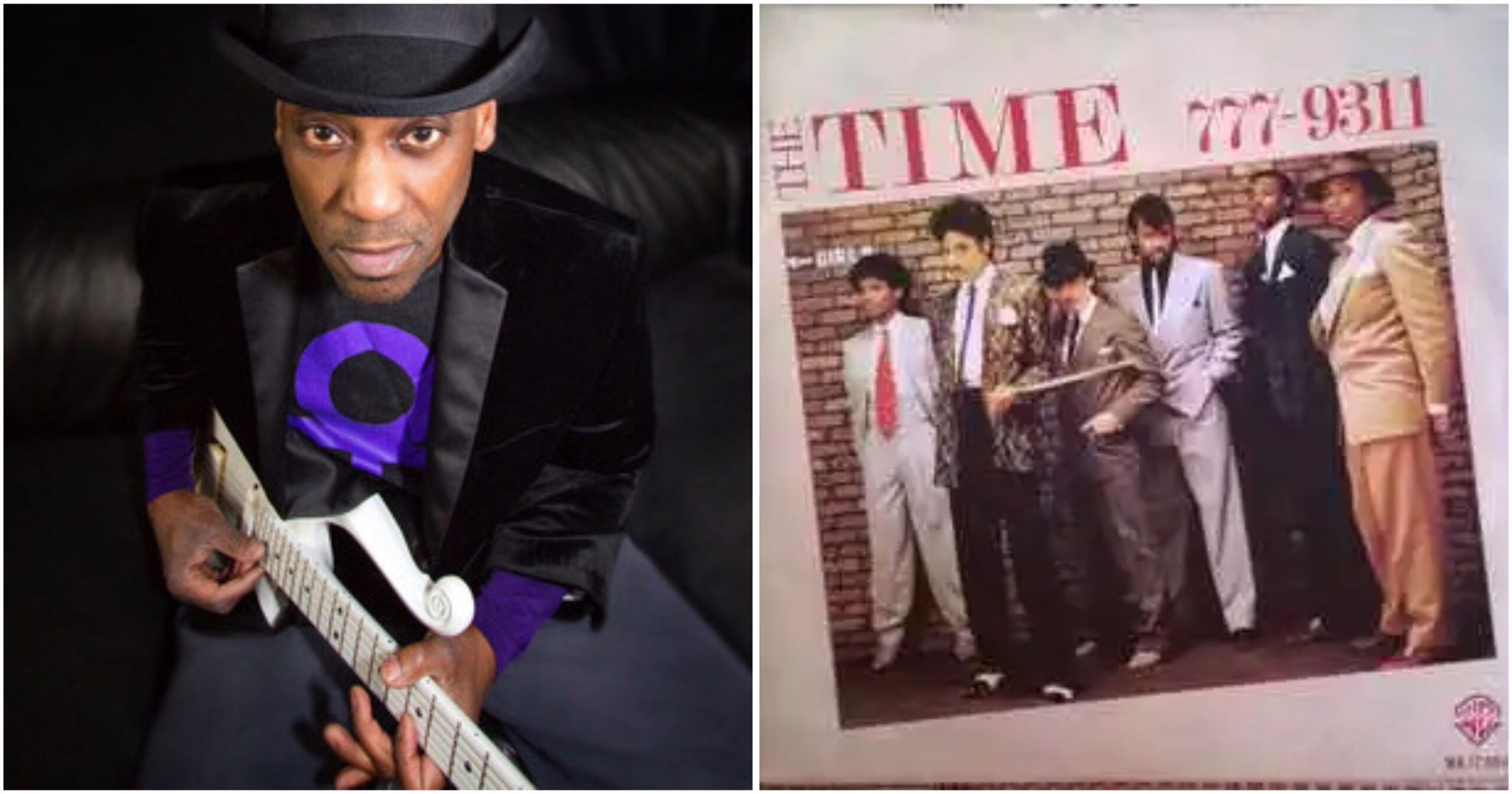
The Story Behind ‘777-9311’ and the Drum Legend Who Didn’t Play It: Remembering Jellybean Johnson, who died suddenly at the age of 69 on November 21, 2025
(November 23, 2025). Imagine being the career-long drummer for one of the most electrifying bands to come out of Minneapolis’ legendary ’80s funk scene… only to watch the funkiest drum riff your group ever laid to wax become a signature moment you didn’t actually play.
Such was the plight of The Time’s Jellybean Johnson and his group’s 1982 classic R&B jam “777-9311.” That song, a No. 2 smash on the Billboard Hot R&B/Hip-Hop Songs chart in late ‘82, featured one of the most distinctive, most complex drum patterns of any song before or since. Known for its dizzying hi-hat and offbeat snare hits, the drum beats for “777-9311” have been analyzed and covered by drummers on YouTube videos for years. But here’s the twist that has become Minneapolis-funk lore: Johnson—the band’s real drummer and founding member—didn’t play a single note of it on the original recording.
Instead, the distinctive arrangement was the work of The Time’s songwriter, producer, and boss: Prince. The Purple One wrote and produced (under the moniker The Starr Company) “777-9311” as well as the other tracks on its parent album, What Time Is It?. Prince also played all the instruments on “777-9311,” including the now-iconic groove, which was mostly the product of a drum machine—the Linn LM-1 “drum computer”—that Prince fancied at the time.
The first few bars of “777-9311” are a tight kick drum and closed hi-hat opening before funky rhythm guitars and later, the intricate hi-hat and off-beat snare hits that became the song’s signature kick in. Even the cymbal crashes—the only non-machine percussion—were Prince’s overdubs.
What’s interesting is that, after the song’s second chorus, lead singer Morris Day (who the label credited for writing the song despite Prince doing the honors), shouts out “Jellybean” at about the 1:47 mark as the tune is reduced to the drum breakdown. It’s a wink, a nod, and—depending how you interpret it—maybe even a joke between bandmates.
All of this begs the question: why would Prince—himself still two years removed from international superstardom—give away songwriting and drum credits on an album for which he wrote and performed everything? Was it generosity? Marketing savvy? Did the Minneapolis mastermind feel it was the best way to promote his upstart band without risking a Prince burnout…a sort-of self-preservation.
More than likely it was all three. Prince was a highly prolific artist who needed an outlet for all of his creativity and didn’t want to oversaturate the market with his own name. Remember, this album was released just two months ahead of his own double-vinyl opus, 1999, plus his venture with Vanity 6 was also charting at the time. And, as we later learned, Prince’s label—Warner Brothers Records, home to all three acts—famously tried to rein in his output, to the point where he was compelled to change his name to an unpronounceable symbol and paint the word “Slave” in his face in protest.
Still, Jellybean—ever the professional—played along. And the intricate pattern that made “777-9311” so funky was one he likely had to learn in order to perform the song live for future gigs, or at least learn it sufficiently enough to be able to mimic it over the programmed track. (The Time famously opened for Prince during his 1982-83 “1999 Tour,” the same one that got legendary producers Jimmy Jam & Terry Lewis fired from The Time after they moonlighted as producers on S.O.S. Band’s “Just Be Good To Me” in 1983.)
Watch: The Time performs “The Walk” and “777-9311” on Dick Clark’s American Bandstand in 1983.
After The Time’s initial split in 1984, Jellybean continued contributing to the Minneapolis funk scene by first joining another Prince-associated group, The Family, where Prince again played nearly all the instruments on their sole, self-titled album. How many readers remember their 1985 modest hit “The Screams of Passion”? When The Family dissolved within a year of its formation, Johnson joined former Time bandmates Jam & Lewis as part of their Flyte Tyme Productions.

He then went on to co-produce several hit songs for the company, including five top ten R&B hits: “Why Should I Cry? by Nona Hendryx, “Crucial” by New Edition, “Criticize” by Alexander O’Neal, and top-ten crossover smashes “Black Cat” by Janet Jackson (also a No. 1 pop hit), and Mint Condition’s “Breakin’ My Heart (Pretty Brown Eyes).”
Jellybean had seven children and, along with his wife in 2022, founded the Minneapolis Sound Museum—a labor of love to “put a spotlight on the others who came along with Prince but they weren’t famous like him,” Johnson told local Fox affiliate Fox 9-KMSP in 2023. It was a mission that mirrored the humility and generosity he carried throughout his life. Whether the museum ultimately opens its doors or remains a vision in progress, its founding sentiment is already part of his legacy.
Jellybean Johnson may not have played the funkiest drumbeat The Time ever put on tape—but he lived the rhythm of that era more authentically than most. His sticks powered the live shows. His creativity helped shape the Minneapolis sound. His production steered R&B hits across decades. And his heart belonged to the musicians who built a movement that redefined the 1980s.
In honoring him, we honor the truth of Minneapolis funk: Sometimes the groove belongs to the machine, but the soul belongs to the people behind it.
Rest in rhythm, Garry George “Jellybean” Johnson (November 19, 1956 – November 21, 2025).

DJRob
DJRob (he/him) is a freelance music blogger from the East Coast who covers R&B, hip-hop, disco, pop, rock and country genres – plus lots of music news and current stuff! You can follow him on Bluesky at @djrobblog.bsky.social, X (formerly Twitter) at @djrobblog, on Facebook or on Meta’s Threads.
You can also register for free by selecting the menu bars above to receive notifications of future articles.