


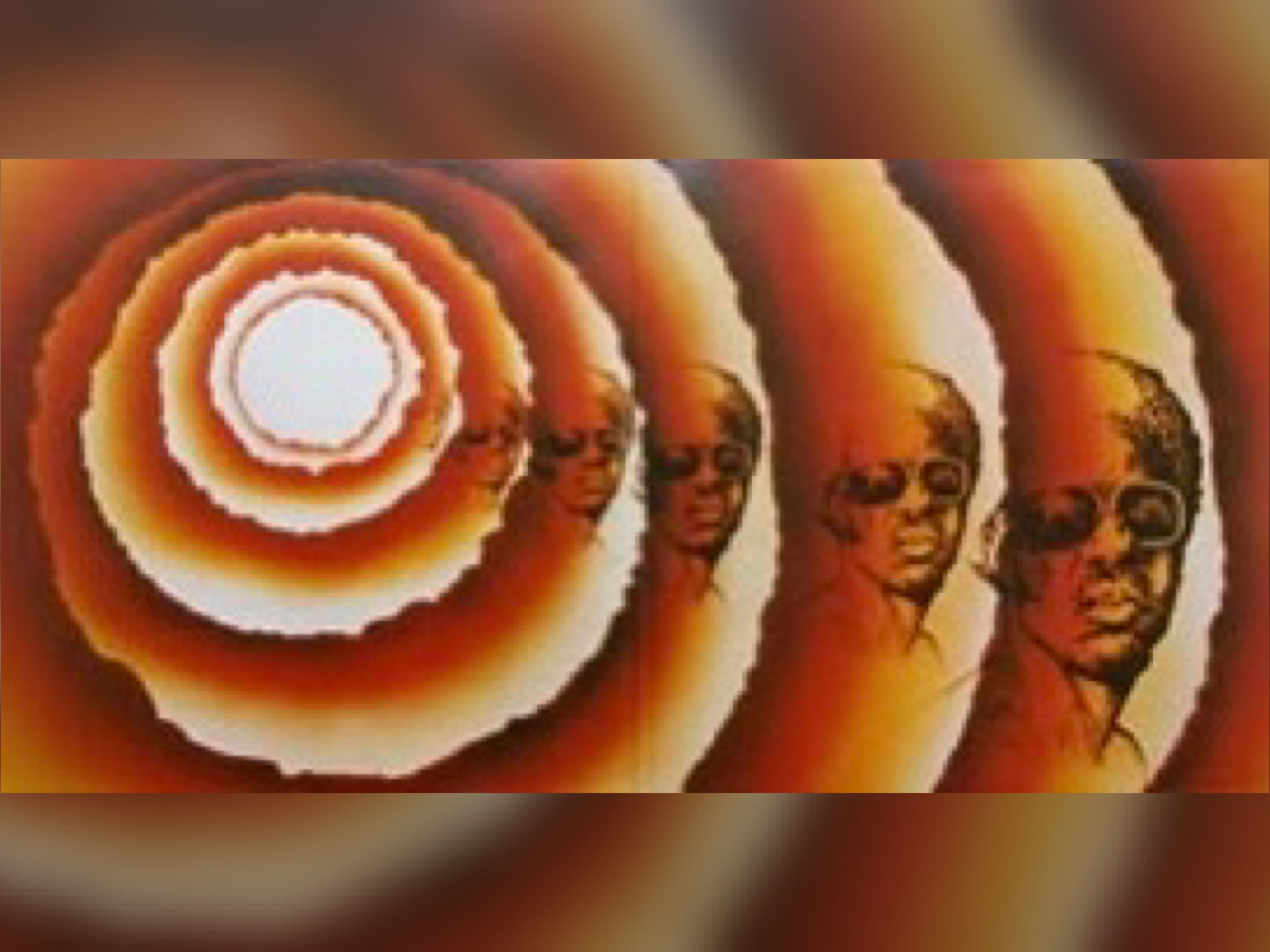
(October 3, 2026) – In October 2016, DJROBBLOG commemorated the 40th anniversary of Stevie Wonder’s landmark album Songs in the Key of Life by ranking its original 21 tunes. Little did we know then that there were songs from the original recording sessions just waiting for their day in the sun. Then Stevie up and surprised us with a new four-song EP on the album’s 50th anniversary (Sept. 28).
The four songs — “It’s Easier,” “My Life Story of Love,” “I Can See the Sun in Late December,” and “I’m Into Livin'” — were recorded between 1974-76 during the original sessions and didn’t make the original cut but easily could have been included. In fact, I’m now imagining a world where on the original album these four songs joined the four that formed the bonus EP called “A Something’s Extra” to make SITKOL a complete, triple-vinyl LP.

As a refresher, SITKOL was the culmination of Wonder’s classic album period, which arguably began with 1972’s Talking Book (although one could legitimately include that year’s Music of My Mind in this grouping) and continued with ’73’s Innervisions and ’74’s Fulfillingness’ First Finale. All four albums were huge sellers and Grammy winners, with the latter three taking “Album of the Year” awards, and the last two topping Billboard’s pop and R&B charts.
Songs, released after a then-unheard-of two-year break, was the most highly anticipated and, ultimately, the most successful of any of Wonder’s albums, spending 14 weeks at #1 (13 of those consecutively), generating four top-40 singles along with many more unreleased classics, and becoming a musical and cultural phenomenon against which many future R&B and pop albums, including Wonder’s own, have been futilely compared.

Like many of the blog’s readers, I’ve had decades to digest the original 21 songs, which appeared in vinyl form on a two-album set plus the 7-inch “A Something’s Extra” EP. Those years have certainly changed the perspective and context with which I’ve judged these tunes, as I’ve gone from a ten-year-old boy who better identified with the more pop, hook-laden hits like “Sir Duke” and “I Wish,” to the now 60-year-old who better appreciates the cautiously hopeful, message-driven “Love’s In Need Of Love Today” and the introspective beauty of “Joy Inside My Tears.”
For me, the biggest test for the four previously unreleased songs: would they naturally fit on an album that is viewed by many to be Stevie’s greatest and arguably one of the best LPs of all time?
The answer is a resounding yes! In fact, after giving them repeat listens over the past several days, it almost feels like I’ve known these four tunes for half a century. So now it’s time to put that to the test by ranking them among the original 21 tracks.
Here is the blog’s updated 50th anniversary ranking of the now-25 Songs in the Key of Life, from No. 25 (the very good) to No. 1 (the absolute greatest)! The update accounts for the four new songs, newer perspectives on some of the original tracks, and the passage of 10 years since this article was originally published in 2016.
25. “All Day Sucker”
For starters, there isn’t a bad song on SITKOL. A No. 25 ranking simply means that this song had 24 other great songs to compete with. On “All Day Sucker,” Stevie Wonder’s protagonist was trying to sew some wild oats, except one thing: he was being played. It seemed the love-starved singer only wanted some lovin’ from his love interest, but she saw fit to lead him on at each offering. By verse three of this scenario, you’d think he’d learn to leave this girl alone, but, by his own admission, we know he won’t.
24. “Easy Goin’ Evening (My Mama’s Call)”
One of several jazz-flavored offerings on SITKOL, this instrumental tune could easily have been the backdrop of a Spike Lee joint some 15 years later. The song and its title go perfectly together, and Stevie’s harmonica playing is as good as in any other tune he’s done (well maybe besides “Isn’t She Lovely,” which comes up later in this countdown).
23. “I’m Into Livin'” (2026 EP)
This previously unreleased track concludes the new 50th anniversary EP and features Stevie reminiscing about his old partying and womanizing days (an odd perspective for someone who was just 26 at the time). This funky tune took a few listens to resonate with this blogger, but it ultimately did. The backing vocals by Deniece Williams and Thelma Houston — who would both have big breakthroughs in the months following SITKOL‘s release — are evident (and welcome). And when Stevie spells out “L-O-V-E, Love” in the song’s refrain, you’re convinced he means it when he claims to have abandoned his old philandering ways.
22. “Saturn”
What a sad portrayal of life on war-obsessed earth, as reflected through the eyes of a “visitor” from Wonder’s make-believe, utopian world on the planet Saturn, where people don’t fight wars the way earthlings do (they “put back all the things they use”). A perfect world Saturn might very well be – with its rainbows, moonbeams and orange snow, and where flying people live to be 205 years old. It’s a wonder then that the visitors portrayed in “Saturn” keep returning to earth, suggesting that the snow at home isn’t always as beautifully orange as one might think.
21. “Ebony Eyes”
“Saturn” seamlessly segues into a scene of some school-aged girls playing hopscotch and talking about boys as one of the happier tunes on SITKOL begins. As song tracking goes, this scene is actually contained on the last 30 seconds of “Saturn,” not the beginning of “Ebony Eyes.” But it serves as the intro to the latter song and, as the tune goes, Stevie describes the beauty of a girl “born and raised on Ghetto streets.” You can almost picture Wonder – or anyone else for that matter – sitting at the piano and playing this tune in someone’s juke joint 20 or 30 years earlier. In a bit of irony, as Wonder’s happy ode to ghetto beauty starts, you hear what sound like gunshots ringing out as the girls in the opening scene finish twirling their jump rope. At least they seem undaunted, suggesting either that it wasn’t really gunshots – or, sadly, that it was so common that even they wouldn’t be fazed.
20. “My Life Story of Love” (2026 EP)
In this previously unreleased track from the new 50th anniversary EP, Stevie sings of an evasive love interest in lyrics that are awash with earthly metaphors. Given the musical genius was only 26 years old at the time these songs were originally tracked, you’d almost get the impression he’d lived the life of a man three times his age, an irony now with the song’s 2026 release and Wonder soon approaching octogenarian status.
19. “Have A Talk with God”
Stevie wasn’t afraid to deliver a religious message here and there as he is clearly a spiritual man. The title’s therapeutic advice was central throughout the lyrics. Musically, this mid-tempo song’s best asset is the continuously repeated harmonica riff, which itself is sometimes layered in two-part harmony. As track No. 2 on SITKOL, “Have A Talk” is nestled between two otherwise depressing tunes to start the album, but its message is uplifting, albeit brief – the song is the shortest on the album at 2:42.
18. “Ngiculela – Es Una Historia – I Am Singing”
During his break following the album Fulfillingness’ First Finale, Stevie Wonder reportedly was serious about emigrating to Ghana in protest to how the U.S. government was running this country (a feeling captured so effectively on his 1974 #1 hit from Fulfillingness, “You Haven’t Done Nothin'”). But it was the language of another African country, South Africa, that formed the first part of this three-part-title song. The 3-way combo of Zulu/Spanish/English led to “Ngiculela – Es Una Historia – I Am Singing,” a somewhat joyful song that serves as the antidote to some of the more depressing tunes on the album.
17. “Village Ghetto Land”
This was one of the politically and socially conscious songs on SITKOL, one in which only one instrument was used in its production. I interviewed the late former Isley Brother and virtuoso Chris Jasper in 2016 and he – a master on the keyboard and synthesizer himself – praised the latter instrument for its orchestral capabilities, as well as Stevie Wonder’s use of it. “Village Ghetto Land” was created with a Yamaha GX-1 synthesizer (no percussion or other instruments were used), giving it an orchestral vibe with faux strings that Wonder often recreates onstage with real violins.
As another downbeat song, it was a surprising way to begin the album (as part of a trilogy of depressing tunes), but it was nonetheless effective. You can just picture “beggars eating their meals from garbage cans,” and politicians laughing and drinking while “drunk to all demands.” The line “families buying (and presumably eating) dog food now” could’ve been inspired by the 1975 “Good Times” episode in which one Evans family neighbor had to resort to exactly that. Wonder effectively ends this sad story with the rhetorical “tell me would you be happy in Village Ghetto Land?” That’s easy: nope.
16. “Black Man”
It’s noted that over 150 people contributed to the making of Songs in The Key of Life, and it’s likely that at least 30 were involved in the creation of this tune, a celebration of diversity and inclusion at a time when people were just starting (or attempting) to embrace the concept. The song’s title may have been “Black Man,” likely a turn-off for some, but the “brown,” “yellow,” “red,” and even “white” man got nods on this musical history lesson. True to its title, though, all the verses begin by honoring the contributions of black people. Chicago founder Jean Baptiste, Benjamin Banneker, Harriett Tubman, as well as Caesar Chavez, Hiawatha and Abraham Lincoln are just some of those whose history-making events are recalled in the song’s verses. And although he is name-checked twice in the song, it’s not Christopher Columbus himself that’s being honored, but those around him (Lewis Santangel – a white Jewish financier, and Pedro Nino – a Latino navigator of one of Columbus’ ships). The timing couldn’t be more ironic as Americans celebrate the Indigenous People/Columbus Day holiday, both in October 1976 and this month (Oct. 2026).
15. “Summer Soft”
Even though they’re clearly different, this song always reminded me of “Golden Lady,” from Wonder’s 1973 LP, Innervisions. This was certainly not because of its lyrical content or melody, but perhaps because of its structure or feel. For “Summer Soft,” as only he could, Stevie humanizes the two seasons winter and summer, each with its own deceiving way of luring you into its painful trickery. Is it sun or snow, or rain or clear days you’ll find? One never knows.
14. “Ordinary Pain”
As a ten-year-old kid, I used to laugh at the second half of this song, particularly the sass and attitude brought on so effectively by one Ms. Shirley Brewer. Now I know its true meaning: there are often two sides to every story. Stevie – who wrote the whole song (including the sassy reply) – captured that message brilliantly. By the end of the first part, you’re left feeling sorry for the heartbroken protagonist that is Wonder. His is a melancholy tale of oh-woe-is-me heartbreak (at the hands of a woman who’s apparently and relentlessly left him). As that part ends on Stevie Wonder’s dark electric piano notes, you almost know it’s a setup for something more. And it is. Brewer’s response explains all – or at least her side of the story – about the man’s philandering ways that led to her leaving in the first place. You’re left to wonder whether this was somewhat confessional by Stevie who had already been through one marriage at the time. To further drive home the two parts’ diametrically opposed perspectives, Wonder was even smart enough to employ different background singers for each one: using angelic sounding songbirds like Deniece Williams, Minnie Riperton and – ironically – ex-wife Syreeta Wright for his part, while the reply featured the backing vocals of a sassier bunch (the lesser known Linda Lawrence, Terri Hendricks and Sundray Tucker among them). Sheer genius. Maybe this song should be higher on the list.
13. “Knocks Me Off My Feet”
For an album and an artist that so famously celebrate love, this is the only true love ballad on the album – and it’s a mid-tempo one at that. Beginning with a solo piano intro that signals the opening melody of the verses, the song brings us down a bit from the three upbeat tunes that preceded it (“Contusion,” “Sir Duke” and “I Wish”). That change-of-mood and tempo is a welcome one for an album admittedly short on songs of its type. With as much airplay as it received during 1976-77, I always thought “Knocks” would have been single #3 (or 4) from SITKOL. The fact that Motown didn’t capitalize by releasing it (or the more popular “Isn’t She Lovely”) made the album’s singles marketing strategy more dubious, despite the album’s overall success.
12. “I Can See the Sun in Late December” (2026 EP)
Stevie, as a blind man, has a way of seeing the beauty in things that seeing people cannot. That theme is echoed throughout SITKOL, particularly on songs like “Isn’t She Lovely,” “Ebony Eyes,” “Saturn” and this previously unreleased track. Musically, it reminds me of “Joy Inside My Tears,” albeit faster in tempo. Melodically it stands up to nearly any other song on the original SITKOL. The skip-beat snare drumming during its choruses is its most distinctive feature — a technique I don’t believe I’ve heard used in any other Stevie track. But the song’s main virtue is its message, which is basically asking listeners, “have you ever just stopped to soak in all of the universe’s beauty?” Instead of the newly released EP version, above is a 1974 live performance of the song by Stevie on the German program MusikLaden.
11. “Pastime Paradise”
As a ten-year-old kid, I thought this was the “oddest” song on the album (or a close second to “Saturn”). I can’t recall why I thought so then, but maybe it was the unique synthesized string arrangement that could easily pass for real violins, or the Hare Krishna backing vocals (performed by the West Angeles Church Choir). Or perhaps it was that dark melody, which itself would be the inspiration for a Coolio sample 19 years later (in the #1 smash “Gangsta’s Paradise”). Whatever it was, at least it inspired me to learn. I remember looking up all those words that ended in “-ation” that populated the song’s lyrics.
10. “Contusion”
After three downbeat songs to start the album, Wonder picked up the pace with this jam session, “Contusion.” It was one of two instrumentals on the album (“Easy Goin’ Evening” being the other) and featured a stellar lead guitar performance by Michael Sembello (later of “Maniac” fame). It also served as a perfect transition from the album’s first three lower-tempo songs to the upbeat one that follows it, “Sir Duke.”
9. “It’s Easier” (2026 EP)
Ahh… what could’ve been. After its release as the lead-off track on Wonder’s new SITKOL 50th anniversary EP, I wondered what might have been had this bossa-nova sounding romp (with plenty of castanets punctuating its upbeat rhythm) been included on the original album. It is classic Stevie at his lyrical and musical best, with a clever story told from the perspective of a man torn by love and its many heartaches. As Stevie’s protagonist seeks the help of a “love physician,” you immediately realize that this isn’t your ordinary love doctor that starred in so many hits of the 1970s (Carol Douglas’ “Doctor’s Orders,” Robert Palmer’s “Bad Case of Lovin’ You,” etc.), but one who gave it to his patients straight (“that’s why I say, ‘it’s easier to say, “love, bye bye”‘”). Did I get all those commas and quotation marks right?
8. “If It’s Magic”
The late harpist Dorothy Ashby was a jazz instrumentalist who had a notable career as player and composer before she contributed to hit albums by R&B artists like Bill Withers, Minnie Riperton and Stevie Wonder. It was on Wonder’s “If It’s Magic” that she shone brightest, so much so that he didn’t bother replacing her in 2014-15 during his SITKOL tour, instead opting to play the original instrumental track of her harp playing when he sang the tune. It proved two things: that Wonder could still sing the song in its original key some 40 years later, and that her contribution was irreplaceable.
7. “I Wish”
Motown was slow to release singles from this album. In fact, when the album was released on September 28, 1976, there were no singles released to radio or record stores as the label was testing the waters with multiple candidates. Radio play apparently dictated that this one be first, and it wasn’t released until that November, debuting on the charts a full seven weeks after the album. (Second single “Sir Duke” wasn’t released until “I Wish” was already out of the top 40). Still, “I Wish” flew up the charts – becoming Wonder’s fifth pop #1 (and 13th #1 on the R&B list). The song’s best part (besides Wonder’s reminiscent and slightly wistful foray into his childhood past) were the horns that punctuated each chorus and the coda. The brass included two trumpets and two saxophones (a tenor and an alto) that could’ve been inspired by Earth, Wind & Fire (Stevie later admitted in an interview that the intro was inspired by the guitar intro to EWF’s “Shining Star.” The culmination is still considered one of Stevie’s best.
6. “Isn’t She Lovely”
I will always wonder whether Stevie could’ve had three #1 songs from this album. “Isn’t She Lovely” received more airplay than the eventual singles “As” and “Another Star,” and should’ve been single #3. As it was, Motown and Wonder couldn’t agree on whether to edit the 6:34 song – a celebration of his first daughter Aisha’s birth – down to a more radio-friendly 3:30-minute version (that would’ve excluded the playful father-baby banter that takes the song to its conclusion). Thus, “Lovely” never saw a commercial single release. That didn’t stop Motown, however, from editing the song anyway – and sending that shorter version to pop radio, helping make it one of Wonder’s most played classics. In fact, I’ve heard it so many times that I can whistle Wonder’s harmonica vamp note-for-note as the song plays out. I know, weird but true.
5. “Sir Duke”
Many feel that this was the best song on the album, while others dislike it (likely because others feel it was the best one). It was certainly the biggest pop hit from SITKOL, spending three weeks at #1 on the Billboard Hot 100 in May/June 1977, eight months after the album’s release. It was a celebration of often under-appreciated jazz musicians, particularly the legendary Duke Ellington who died in 1974 just as production and songwriting was beginning on this album. The song indeed had an early 20th-century big-band feel to it, with its opening horn riffs, the even more complex brass (and keyboard) arrangement that followed each chorus, and the horns that filled the second and third choruses themselves (“you can feel it all over”). A celebration of jazz greats, yes. But pure pop candy, too.
4. “Joy Inside My Tears”
This is one of the best songs on SITKOL, a triumphant if not melancholy tour de force that features Wonder at his painstaking best. The tempo is slower than slow, but that doesn’t matter now (it did when I was younger as I always skipped it without fail). As one of the album’s simpler tracks, the song features three musicians: Wonder, keyboardist Greg Phillinganes (who also served as music director on Wonder’s 2014/15 SITKOL tour) and background singer Susaye Green. But it’s Stevie’s vamp at the end that sends this joyously sad tune over the top. Give it a real listen sometime, because it’s likely you missed it the first time around – that is if you’re anything like me.
3. “Love’s In Need of Love Today”
This fairly restrained (musically, at least) but beautiful tune kicked off Side 1 of the album. The music is understated and never builds (with the exception of the drums and percussion during the extended second chorus), but Stevie’s vocals do. Even when he “brings it down a little,” his vamp provides most of the song’s content and context. He even gets in an otherwise corny “what the world needs now is L-O-V-E love” towards the end of the song. The message is clear from the start when he opens as a slightly dismayed radio announcer, “Good morn or evening friends,” the ambiguity of which was likely to capture the world’s attention regardless of time zone… a subtlety that I clearly didn’t appreciate at ten years old.
2. “Another Star”
This classic dance jam – the last song on the proper album – was as close to true disco as Wonder ever came. As such, the tune peaked as an album cut at #2 on the nascent Billboard National Disco Top 40 chart in 1976/77. It was then released as a proper single nearly a year after the album, and a full month after prior single “Sir Duke” had finished its chart run, bringing into question (again) Motown’s dubious singles release strategy for the project. Despite all that, “Another Star” is a great dance workout, with its Latin-flavored, four-on-the-floor cymbal-heavy arrangement and anthemic “la-la-la-la-la, la-la-la-las” helping to create the song’s joyous feel. To wit, this anthem features prominent contributions from such A-listers as George Benson (guitar and background vocals), Nathan Watts (frequent bass player on many SITKOL tracks) and flutist Bobbi Humphrey. “Another Star’s” presence (and that of a few others) proved that there was indeed joy inside Mr. Wonder’s tears, and – even though it was one of the two non-top-10 hit singles from SITKOL, it reigns as one of the album’s best – if not THE best!
1. “As”
This was the last single released from SITKOL, and in my opinion, the best one. Released in November 1977, more than a year after the album’s release, the song made the top 40 twice: in December (peaking at #39) and returning again in January ’78 (peaking at #36) before leaving for good. That it was even able to chart some 15 months after the album’s release in 1976 was a testimony to how good this anthem was. Best of its qualities: the chorus, sung in choir-like fashion by surprisingly just two people: Mary Lee Whitney and Stevie himself. Second-best: its lyrics. Only Wonder could turn phrases like: “just as hate knows love’s the cure, you can rest your mind assured – that I’ll be loving you always.” Things turn rough during an extended bridge when Wonder’s gritty vocals deliver a sermon with convincing lines like “you can bet your life times that and twice it’s double, that God knew exactly where he wanted you to be placed,” before returning to normal Stevie voice with an emotional vamp that finishes the song’s seven minutes and eight seconds. And then, those precious minutes and seconds are gone before you even know it.
Click here to see DJROBBLOG’s review of the November 2014 live concert performance of Stevie’s masterpiece in Atlanta, Ga.
DJRob

By the way, if you enjoy this and my other articles, feel free to sign up for free to receive notifications of new postings as they’re issued.
As always, thanks for all the love and support of djrobblog!
#StevieWonder #Songsinthekeyoflife #50thAnniversary
#djrobblog