


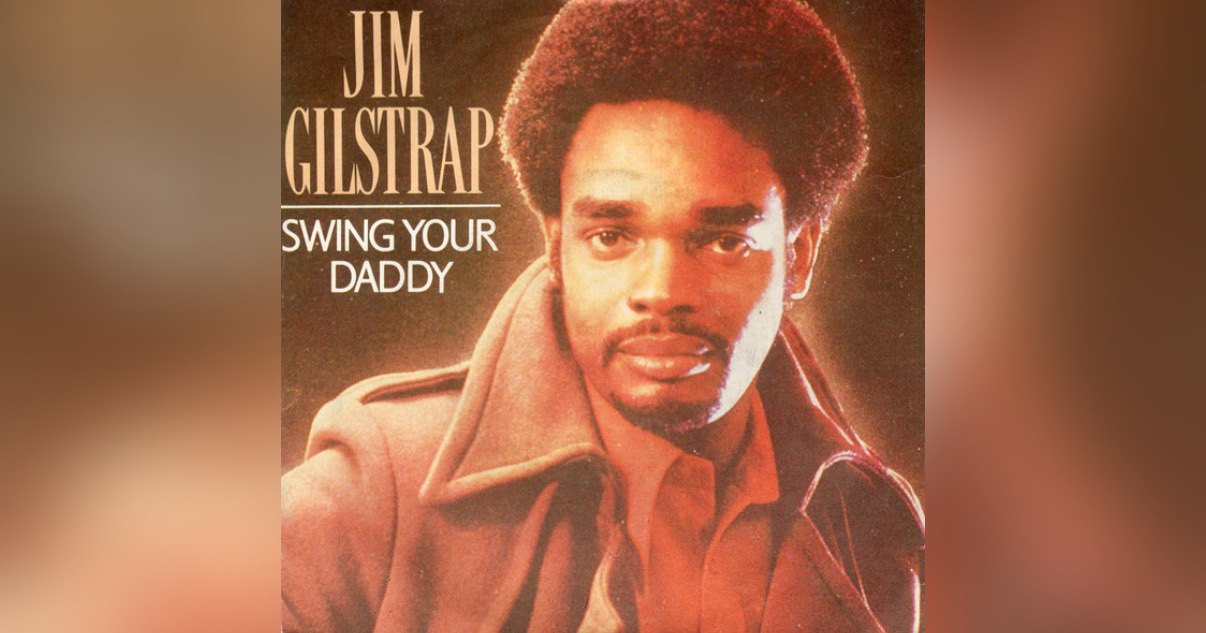
(July 23, 2026) – Jim Gilstrap, the vocalist best known for singing the opening lines to two of the most iconic songs in 1970s Black pop culture, died last week (July 18) at 79 years old. A dependable session musician, if not a household name, Gilstrap lent his expressive tenor to the music of some of the industry’s biggest stars, including Quincy Jones, Michael Jackson, Luther Vandross, Aretha Franklin, Patti LaBelle, Whitney Houston, Michael Bolton, Kanye West, and others. Like many great session vocalists, millions of people knew his voice long before they ever knew his name.
But it was those two iconic songs – Stevie Wonder’s “You Are the Sunshine of My Life” and the opening (and closing) theme to the legendary television series Good Times with female Motown vocalist Blinky Williams – that immortalized him as a vital part of 1970s American pop culture.
As this blog celebrated in a tribute earlier this month to the late Bonnie Tyler, Gilstrap’s opening lines on Stevie’s hit marked the first time in history that an uncredited solo vocalist sang the opening lines on someone else’s No. 1 record (Tyler’s “Total Eclipse of the Heart” marked the second time that happened). But for far more personal reasons, Stevie’s tune – and Gilstrap’s voice – was indeed a major part of my childhood. As the song that opened Talking Book, which itself was a quintessential part of our household’s album collection and one that Mom played so often it became part of the soundtrack of my childhood, Gilstrap’s smoothly sung opening line was the first voice I’d hear on countless afternoons growing up. Later, it came in handy when I chose “You Are the Sunshine of My Life” to sing during 4th-grade music class.

Wonder clearly trusted Gilstrap. After giving him the unforgettable opening lines on “You Are the Sunshine of My Life,” he continued using Gilstrap as a backing vocalist on the opening tracks of his next two albums, Innervisions (“Too High”) and Fulfillingness’ First Finale (“Smile Please”). Years later, Gilstrap would again appear on opening tracks for two Quincy Jones-produced classics—Michael Jackson’s “Don’t Stop ‘Til You Get Enough” (from Off the Wall) and Jones’ own “Ai No Corrida” (from The Dude). Whether by design or coincidence, few singers became so closely associated with opening some of popular music’s most beloved and iconic recordings.
But it’s what Gilstrap’s vocals opened next in 1974 that made him a more prominent weekly fixture in millions of households during the second half of the ‘70s – a tune that unexpectedly became intertwined with one of my own life’s strangest coincidences.
Gilstrap’s was the first voice you heard on the theme song from TV’s 1974-79 classic sitcom Good Times, the first show ever to feature a two-parent Black household (although father James was tragically taken away just two years after its debut). The show was set in Chicago – purportedly in its Cabrini Green housing projects, in the city’s geographically incorrect “south side.” The city’s skyscrapers, particularly those in Cabrini Green, served as the show’s backdrop and, notably, its setting.
Every week, as the show’s opening credits rolled and Gilstrap and Blinky Williams alternated lines on its theme, I and millions of other viewers saw these buildings as the camera panned north and west through its River North district, traversing the Chicago River as it zoomed into the Cabrini projects.
Never missing an episode, I also never imagined that — decades later — I’d be inhabiting this same area, surrounded by the same skyscrapers with a view that was obstructed by one of the very buildings that became synonymous with my Chicago living experience and which was immortalized in those opening credits.
In 2014, I relocated to Chicago from Philly and moved into a condo in River North, in the old converted Montgomery Ward warehouse. One particular building caught my attention. Just across the street was Montgomery Ward’s much taller former headquarters. Both buildings had been converted into condominiums in prior decades, and it was the taller headquarters building that famously comes into view during the Good Times opening credits just as Gilstrap sings “any time you’re out from under” and lead actor Esther Rolle’s name appears onscreen.

As I examined my surroundings and the Good Times skyline more closely, I realized that I was living right in the heart of it, with the former headquarters obscuring my shorter building’s own view of the greater Chicago skyline. I couldn’t help laughing at the irony. As Gilstrap sang “any time you’re out from under,” the very building my own condo has never been out from under slid into view.

From that point on, I would snap pictures of the buildings from my residence (or outside of it) and take YouTube screenshots of the Good Times opening sequence and show this to anyone who’d listen, Gilstrap’s voice soundtracking every occasion. I’d jokingly frame it as me living in the same area that the characters Florida, James, J.J., Thelma, and Michael Evans (along with family friend Willona Woods and later Penny Gordon) “lived” all those years ago on the TV show.

Of course, Cabrini Green doesn’t exist today as it did in the 1970s. And the skyscrapers that the Evans family “inhabited” in those projects have long since been replaced, the result of gentrification. But my living in the former Montgomery Ward warehouse and it being obscured both in my daily view and in the Good Times opening sequence gave me a perspective and story that I’ve been sharing ever since.
It is indeed the story of a lifetime, one forever associated with Jim Gilstrap, whose passing fondly rekindled these memories and whose tenor vocals are forever connected to them. He may have been unsung as a background singer, but he’ll forever be a part of my childhood and later, my adult life, thanks to those two iconic 1970s moments.
Jim Gilstrap rarely occupied center stage. Instead, he specialized in opening the works of others. He opened one of Stevie Wonder’s greatest songs and three of his classic albums. He opened one of television’s most beloved sitcoms. He opened two of Quincy’s greatest productions. And without ever realizing it, he opened a lifetime of memories for one little kid who would eventually find himself living inside one of those famous opening shots.
That’s a remarkable legacy for a singer many people never knew by name — but almost everyone has heard.

RIP Jim Gilstrap (Nov. 10, 1946 – July 18, 2026).
DJRob
DJRob (he/him) is a freelance music blogger from the East Coast who covers R&B, hip-hop, disco, pop, rock and country genres – plus lots of music news and current stuff! You can follow him on Bluesky at @djrobblog.bsky.social, X (formerly Twitter) at @djrobblog, on Facebook or on Meta’s Threads.
You can also register for free by selecting the menu bars above to receive notifications of future articles.