


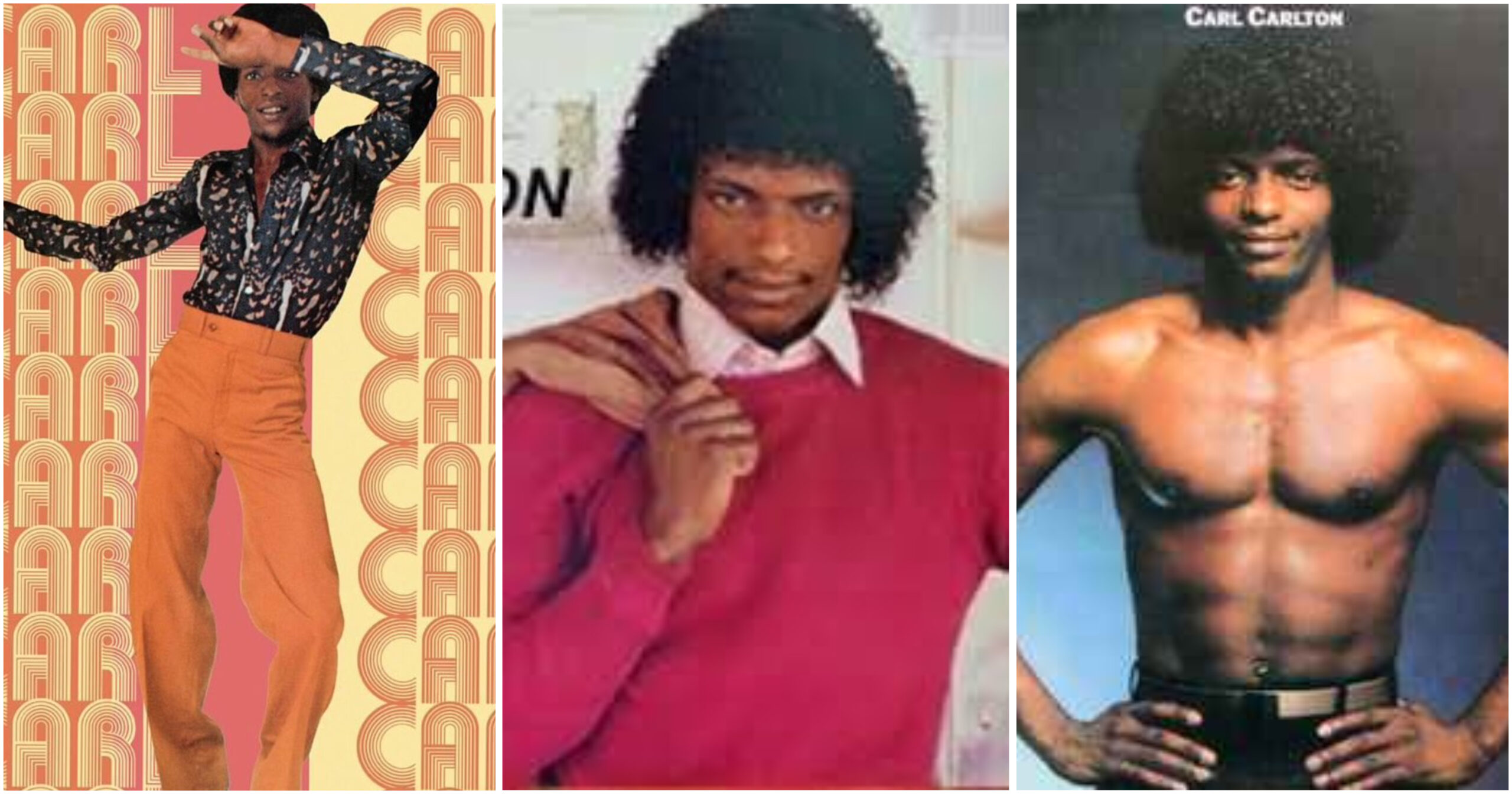
Carl Carlton’s Career Was Defined by Motown—Even Though He Wasn’t on the Label
(December 16, 2025) – Motown was so huge for Detroit-area musicians that it often cast a long shadow from which some local non-affiliated artists couldn’t quite escape.
Carl Carlton was one such artist.
On what was not a slow news day (Dec. 14), Carlton — best known for his two biggest hits, 1974’s effervescent remake of Robert Knight’s soul hit “Everlasting Love” and the funky Leon Haywood-penned “She’s a Bad Mama Jama (She’s Built, She’s Stacked)” — quietly passed away following some recent health struggles. He was 72.
Carlton was born in the Motor City on May 21, 1953, and, as a talented young teenager, even modeled himself after future Motown icon Stevie Wonder—going by the name “Little Carl” Carlton in the mid-1960s just as “Little Stevie” had done a few years earlier. But unlike Wonder, Carlton wasn’t signed to Berry Gordy’s label and never had that hit-making machine behind him.
Instead, Carlton — born Carlton Hudgens — toiled for the lesser known Lando label until he moved to Houston, TX, in 1967 and discovered minor outfit Backbeat Records. There he scored several moderate R&B hits before finding “Everlasting Love,” the song written by Buzz Cason and Mac Gayden and originally recorded by Knight.
“Everlasting Love” — the Perfect Pop/Soul Song
Knight’s original “Everlasting Love” had some interesting geographical ties. Before it broke nationally, it was a No. 1 hit in Carlton’s hometown of Detroit and even had a musical arrangement that Cason and Knight intended to mimic that of Motown acts like the Four Tops and Temptations. The song became the first version of “Everlasting Love” to reach the U.S. pop and soul charts, peaking at No. 13 and No. 14, respectively, in November 1967.
Carlton’s version was second.
Interestingly, it wasn’t Knight’s version that drew Carlton’s interest, but a cover by Motown act David Ruffin who’d just left the Temptations. It was on Ruffin’s 1969 debut solo album My Whole World Ended that he recorded the track, and Carlton brought it to the attention of his producers Papa Don Schroeder and Tommy Cogbill.
Carlton originally recorded a Motown-faithful version of the song and made it the B-Side of his 1973 single, “I Wanna Be Your Main Squeeze.” Neither side of that vinyl 45 hit until Schroeder and Cogbill gave it a disco makeover a year later, eventually releasing it as an A-side. By adding a then-rarely used 16th-note hi-hat riff (the kind that Isaac Hayes made famous with his “Theme from Shaft”), a running guitar and bass rhythm bed, and enough horns and strings to recall both Memphis and Philly soul of the day, the disco-fied “Everlasting Love” became an instant smash.
In another twist, it was Carlton’s earlier inspiration, Stevie Wonder, who had the No. 1 song in the U.S. (“You Haven’t Done Nothin’”) the week Carlton’s “Everlasting Love” moved into the top 20 of the Hot 100. When “Everlasting Love” climbed to its No. 6 peak on November 23, Wonder’s tune fell out of the top 40, leaving no Motown acts in the region. For one glorious week, Carlton, who had modeled his career and his music after Motown singers and who — according to a 1981 Billboard interview — had rejected pursuing a contract with the label to avoid competing with Wonder, was in a top 40 absent any songs from Gordy’s company. That one-week respite ended seven days later when Wonder’s followup, “Boogie on Reggae Woman,” moved into the top 40 during Carlton’s second week at No. 6.
“Bad Mama Jama” and a Promise Kept
When “Everlasting Love” finally left the chart at the end of 1974, it would be nearly seven years before Carlton’s return. It was through his connection with friend and producer Leon Haywood that “She’s a Bad Mama Jama” was born. Haywood, who’d been recording for 20th Century Records and whose own career had been fledgling after early hits like “I Want’a Do Something Freaky To You” and “Keep it in The Family,” was eyeing a return to the label and promised Carlton he’d get him on 20th Century Records if Haywood’s next single landed him a deal.
That song, 1980’s “Don’t Push It, Don’t Force It,” did just that — reaching No. 2 on the R&B chart and No. 49 pop that year. Keeping his promise, Haywood helped Carlton land a deal with 20th Century and Haywood’s production arm, and promptly recorded and released the Haywood-penned/produced ballad “This Feeling’s Rated X-Tra.” That song reached No. 57 soul in 1980 and went nowhere pop. But it opened the doors for Carlton and a whole new album.
It was that self-titled album’s next single, “She’s a Bad Mama Jama (She’s Built, She’s Stacked),” that returned Carlton to chart glory, even if only temporarily. “Bad Mama Jama” was also written and produced by Haywood and released in the late spring of 1981. It was a celebration of the “female anatomy” reminiscent of the Commodores’ “Brick House” from four years earlier, and was easily one of the funkiest tracks of ‘81 — a year that included big hits by funk legends like Gap Band, Rick James, and Cameo. Upon its chart entry, “Mama Jama” started slowly moving from its debut of No. 71 to 66 in late June.
By mid July, Carlton’s hit had picked up steam and moved into the soul chart’s top 40. By the time it leapt to its No. 2 peak in August, there was only one record to beat — ironically a Motown single: “Endless Love” by Diana Ross & Lionel Richie. It could never overcome.
For six straight weeks, the funky “Mama Jama” was pinned down by the year’s most sappy ballad and held to the runner-up position. When “Endless Love” finally relinquished the No. 1 spot, “Mama Jama” was leapfrogged at No. 2 by another legendary Motown act — the Four Tops — whose “When She Was My Girl” (recorded on the quartet’s then-label Casablanca Records) held “Mama Jama” at No. 2 for another two frames.
For eight straight weeks, “Mama Jama” toiled at No. 2 behind Motown legends from his Detroit hometown, unable to take that final step to reach the top. Not coincidentally, Carlton’s next soul top 40 hit was a remake of the Four Tops’ Motown-era classic, “Baby, I Need Your Loving,” which he took to No. 17 soul in 1982.
That was the push and the pull of an industry—and a hometown—that Carlton both embraced but could never quite shake. “Mama Jama” has continued to have a life through sampling and movie tie-ins, but Carlton’s career never reached the heights he achieved through “Mama Jama” and “Everlasting Love.”
There’s another irony to all of this: as “Mama Jama” crossed over to the pop charts, ultimately climbing to a No. 22 peak, there was another sappy duet moving down the list, Rex Smith & Rachel Sweet’s version of “Everlasting Love.” Their version in 1981 and Gloria Estéfan’s remake in 1995 made “Everlasting Love” a part of chart history. Combined with the versions by Knight and Carlton, it is only the second song to reach the U.S. top 40 in four different decades — the 1960s, ‘70s, ‘80s, and ‘90s.
The only other song to do that?
That would be Motown’s “The Way You Do the Things You Do.”
Yep, Motown… with two of those versions featuring David Ruffin, the man whose cover of “Everlasting Love” had inspired Carlton’s in the first place.
In the end, Carl Carlton’s career reads like a Detroit soul parable—one shaped by timing, proximity, and the unavoidable presence of Motown giants who both inspired and overshadowed him. He didn’t have the machine, the marketing muscle, or the endless pipeline of hits, but when the right song met the right moment, Carlton delivered records that have outlived chart runs and decades alike. “Everlasting Love” and “She’s a Bad Mama Jama” weren’t accidents — they were proof of a gifted singer who, even when blocked from the top, left an imprint that refused to fade.
Carlton told Dick Clark in a 1982 American Bandstand interview that he’d worked with Motown legends including Smokey Robinson, the Four Tops, the Temptations, the Commodores, and, incidentally, Stevie Wonder. Yet, for an artist who never escaped Motown’s shadow, Carl Carlton still managed to cast one of his own.
R.I.P. Carl Carlton (May 21, 1953 – December 14, 2025)
DJRob
DJRob (he/him) is a freelance music blogger from the East Coast who covers R&B, hip-hop, disco, pop, rock and country genres – plus lots of music news and current stuff! You can follow him on Bluesky at @djrobblog.bsky.social, X (formerly Twitter) at @djrobblog, on Facebook or on Meta’s Threads.