


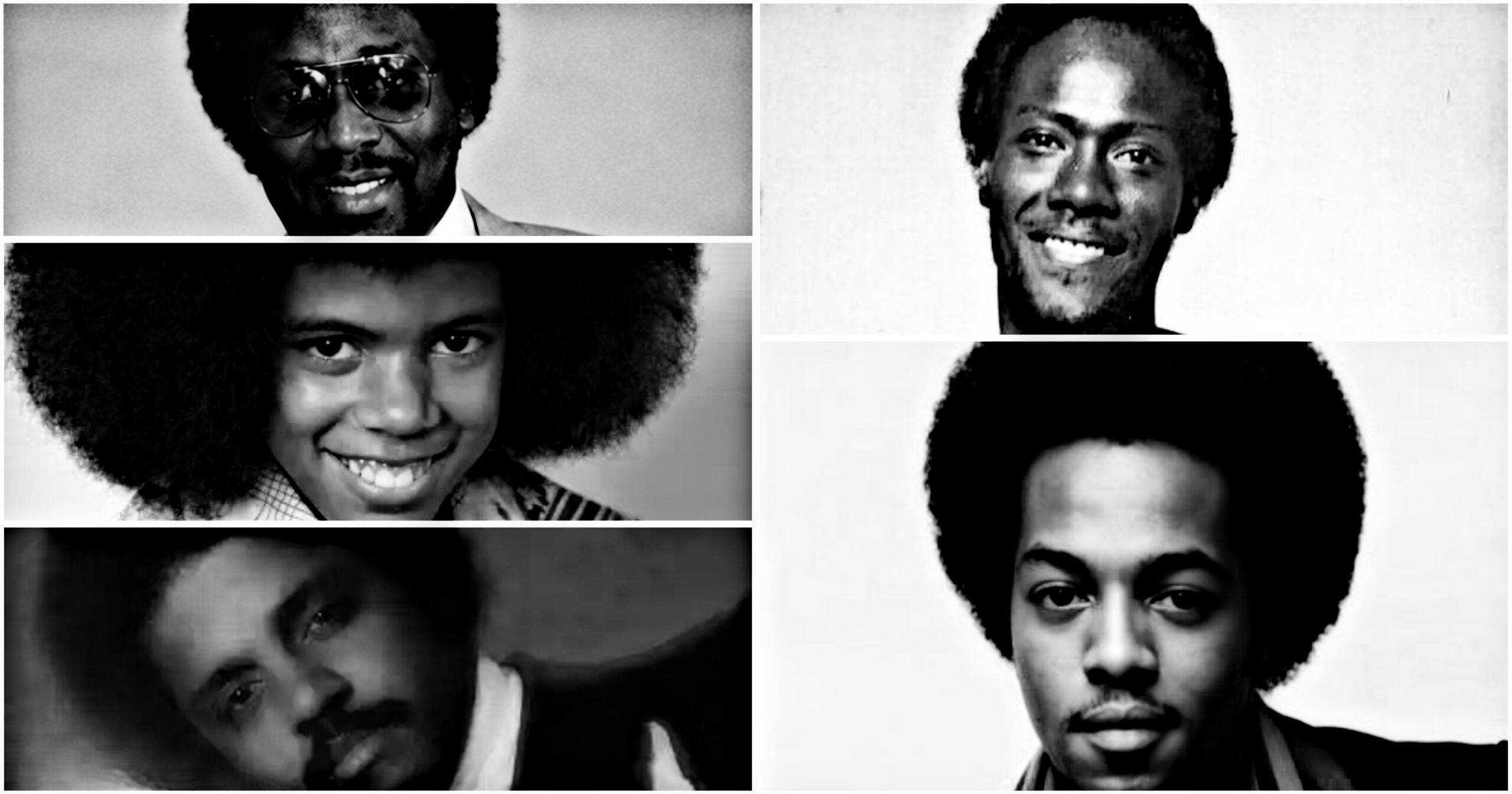
(June 10, 2026) – Five men. Ten Days. More than two centuries of combined musical experience gone.
Between May 23 and June 2, R&B lost five important figures: James Anthony Carmichael, Foster Sylvers, Ronald LaPread, Dexter Wansel, and Peabo Bryson. Three were 75 years old and together they accounted for more than 375 years of life. Some worked largely behind the scenes. One was a child prodigy. Another possessed one of the smoothest, most recognizable voices in late-20th century soul.
Collectively, they represented nearly every ingredient needed to make great R&B records. And in one way or another, all five became part of the soundtrack of my life.
Beginning with the passing of producer Carmichael – the man behind the boards on many Commodores classics and whose loyalty to ex-band member Lionel Richie helped guide the “Hello” singer to superstardom – and culminating with the death of legendary soul man Bryson ten days later, R&B music had one of its most painful periods in recent memory. With the intervening losses of legendary Philly soul producer Wansel, Commodores founding member and bassist LaPread, and child star-turned-producer Sylvers, we were once again reminded of how the passage of time has been unrelenting in the gradual passing of one of R&B’s foundational generations.
The Architects
Their contributions differed greatly, but together they represented nearly every layer of the creative process—from writing and arranging to performing and producing.
Dexter Wansel (Aug. 22, 1950 – May 31, 2026)
When Wansel, 75, died at the end of May, many casual R&B fans – even older ones – may not have known his name, but they absolutely knew his work. He was the architect behind several big soul hits from the late 1970s and early ‘80s, mostly recorded on the iconic Philadelphia International Records label. Among them were classics by Patti LaBelle (“If Only You Knew”), Grover Washington ft. Patti LaBelle (“The Best Is Yet to Come”), The Stylistics (“Hurry Up This Way Again”), The Jones Girls (“Nights Over Egypt”), Phyllis Hyman (“Living All Alone”), Teddy Pendergrass (“Love T.K.O.”) and Pieces of a Dream (“Fo-Fi-Fo”). All those songs were either co-written or co-produced (or both) by Wansel and his longtime collaborator Cynthia Biggs.

I’d known of Wansel through many years of reading liner notes on PIR albums and living in the Philly area, particularly as a teenager listening to one of the most legendary Black music stations in the country, WDAS-FM. That station regularly showcased local Philly talent, with Wansel being no exception. A personal fave was his 1980 single, “The Sweetest Pain,” a WDAS staple featuring relatively unknown vocalist Terri Wells. In a retrospective anniversary celebration of Philly International’s 100 greatest hits, DJROBBLOG ranked “The Sweetest Pain” No. 49. Wansel’s other entry on that list was the instrumental “Theme from the Planets,” a tune from his 1976 debut album Life on Mars, which the blog placed at No. 80. That song is mostly known for its samples in many later hits, including Eric B. & Rakim’s hip-hop classic “I Ain’t No Joke.”
Despite only having two songs on my PIR retrospective, Wansel was a super-talented producer and keyboardist who contributed to many of the other songs represented. His name appeared as a co-producer or instrumentalist on nearly every album released on the label after 1976, including classic LPs by Lou Rawls (Unmistakably Lou, Let Me Be Good to You, and Sit Down and Talk to Me), MFSB (Philadelphia Freedom, Mysteries of the World), and the Jacksons (their first self-titled Epic/PIR release and Goin’ Places). He also served as A&R director for PIR from 1978-80 and was instrumental to the Jones Girls’ early success during that period. It is his keyboard wizardry you hear on the famous opening notes of their “Nights Over Egypt.”
That Jones Girls classic, like many of Wansel’s songs, became a staple in the Quiet Storm radio formats during the early 1980s and beyond. But it wasn’t until he wrote “If Only You Knew” for LaBelle that he got his first No. 1 single. That ballad not only returned LaBelle to the top of the charts, but it was one of the biggest soul hits of 1984 and the spark for a major career boost for its singer, one she is still reaping the benefits of today.
Wansel, who’d recorded four albums of his own for the label, eventually parted ways with Philadelphia International and its founders Kenny Gamble and Leon Huff. He recorded three more albums after leaving the label, including his last release, 2021’s The Story of the Flight Crew to Mars, which was a fitting close to a career that began 45 years earlier with Life on Mars.
While Wansel spread his talents among many artists signed to the PIR label, another iconic producer who died a week earlier was mostly associated with the success of one entity – the Commodores and their former lead singer, Lionel Richie.
James Anthony Carmichael (September 14, 1941 – May 23, 2026)
If you owned any records by the Commodores, chances are you saw the words “Produced & Arranged by James Carmichael & Commodores” printed on the classic blue Motown label. That’s because Carmichael co-produced every Commodores album and hit single recorded on Motown from 1974’s debut Machine Gun through 1981’s In the Pocket.

Carmichael, 84, shaped and refined the Commodores’ sound, helping transform them from a funk band that opened for the Jackson 5 into pop and soul chart-topping headliners. Their first Top 40 hit, 1974’s “Machine Gun,” was a clavinet-driven instrumental that positioned them alongside funk giants such as the Ohio Players and Earth, Wind & Fire. Carmichael then guided a run of hit singles and albums that made the Commodores the leading Black band of the late 1970s. From 1975 to 1979, no other Black group matched their seven Top 10 singles (EWF had six during that span).

As impressive as that chart tally was, their versatility under Carmichael was even more so. Featuring a mix of up-tempo funk (“Brick House,” “Too Hot ta Trot,” “Fancy Dancer,” and “Slippery When Wet”) and beautiful ballads (“Sweet Love,” “Easy,” “Just to Be Close to You,” “Three Times a Lady,” “Still,” and “Sail On”), few soul bands’ repertoires could match their range.
Prior to his Commodores’ connection, Carmichael had been instrumental in the continuing success of the group’s former headlining act, The Jackson 5. He arranged the brothers’ last five Motown studio albums, including 1972’s Lookin’ Through the Window, 1973’s Skywriter and G.I.T.: Get It Together, 1974’s Dancing Machine, and 1975’s Moving Violation. When the Jackson 5 left Motown later in ‘75 for Epic Records (and ironically were co-produced by Wansel on their first two albums there), Carmichael was able to focus primarily on the Commodores, steering them to superstardom.
But another famous departure would soon alter Carmichael’s fate. Following the success of the Commodores’ hit ballads from 1977-79, principle singer/songwriter Lionel Richie became a highly sought-after entity whose solo career was a question of when, not if. When Richie left the group after 1981’s In the Pocket, Carmichael essentially went with him, producing the “Truly” singer’s self-titled debut solo album and its blockbuster follow-up Can’t Slow Down, the latter of which became the first album to spend every week during a calendar year in the top ten (1984).
The year 1984 also created a chart anomaly for Carmichael. The Commodores’ first and only top 40 hit without him and Richie was the Jackie Wilson and Marvin Gaye tribute “Nightshift,” which also topped the R&B chart in early 1985. Carmichael happened to produce another Gaye tribute – “Missing You” – the song that would ultimately become the last top 40 hit for Diana Ross and, like “Nightshift,” a No. 1 soul hit. To complete this irony, “Missing You” was written by none other than Richie. So, Carmichael and Richie were responsible for the last top 40 hit for a Motown legend in Ross, while the Commodores scored their first (and last) top 40 hit without Carmichael and Richie – both Marvin Gaye tributes.
Carmichael, who’d also produced hit albums and singles for outside projects like Atlantic Starr – including this writer’s favorite “Circles” by the band, would go on to produce Lionel’s last album with Motown, Dancing on the Ceiling, as well as his first albums for Polydor and Mercury Records. He also returned to the Commodores for another album, but none were as successful as their collective releases between 1974 and 1986.
Like many fans, I first came to appreciate Carmichael through the artists he produced rather than the producer credit itself. Only later did I realize just how many of the records that formed my musical DNA carried his fingerprints.
The Commodores’ Groove
Ronald LaPread (Jan. 1, 1951 – May 30, 2026 (75)
Unlike Carmichael, who wasn’t part of the band, Ronald LaPread, 75, was one of the Commodores’ six founding members and its bassist. As many fans focused, naturally, on Richie and his vocals (and his knack for crafting hits), LaPread was key to the group’s funk roots, supplying the bottom groove to classics like “Machine Gun” and their first soul No. 1 “Slippery When Wet.”

While arguably no other LaPread bass line was as iconic as the one he performed on their 1977 top five anthem “Brick House,” the self-titled album featuring that single contained some of the bassist’s best work.
He co-wrote the should’ve-been-a-single classic “Zoom” with Richie, while the heavy bass arrangement on the band’s “Easy” gave that otherwise country-tinged track by Richie enough soul for it to top the R&B charts that summer. LaPread’s bass had essentially blurred the lines between schmaltzy pop and legit funk ballads. With additional funky tracks like “Won’t You Come Dance with Me,” “Squeeze the Fruit,” and “Funky Situation,” the 1977 album – dedicated to LaPread’s first wife who’d died from cancer during that time – was arguably the band’s most complete set.
Having met his band mates at Tuskegee Institute in the late 1960s, LaPread and the Commodores found themselves opening for the Jackson 5 while that band was enjoying immense success, before ultimately signing with Motown Records themselves. It’s hard to imagine the group being as successful in the early-to-mid 1970s funk era without LaPread’s bass being part of their rhythmic foundation.
The Singers
Two complete different ends of the soul music spectrum were represented by the losses of two music staples just days apart.
Foster Sylvers (Feb. 25, 1962 – May 30, 2026)
In one of the biggest reversals of styles the seventies decade saw, Foster Sylvers, who died on May 30 of prostate cancer at age 64 (fellas, get checked), went from a child funk prodigy to a bubble-gum pop/soul star in three short years. The funk was “Misdemeanor,” a song that won this writer an iTunes battle decades later and one that to this day never fails to get butts out of seats.
The bubblegum pop was embedded in songs like “Boogie Fever,” “Cotton Candy” and “High School Dance,” all which Foster contributed to vocally as part of the large family group the Sylvers. Those songs sold millions and kept the Sylvers on the radio for the better part of two years between 1976-78.

But it was “Misdemeanor” that remained Foster’s crown jewel. The song, written by big brother and future legendary producer Leon Sylvers, III, and featuring backing vocals from big sisters Pat and Angie, came during funk music’s biggest expansion period of 1973. So large was the musical style’s growth that bands like the Commodores, Isley Brothers, Earth, Wind & Fire, and Ohio Players, were taking Black groups to heights never experienced before with No. 1 albums and singles on the pop charts.
Meanwhile, an 11-year-old Foster wrapped his cherubic voice around the minimalist stop-start funk of “Misdemeanor,” its thumping bass predating that used in bigger hits by the super bands noted above. Indeed, when “Misdemeanor” debuted on the Billboard Soul Singles chart in May 1973, the list was only 50 positions (with Sylvers’ song anchored at the bottom). By the time, “Misdemeanor” climbed to its No. 7 peak that July, Billboard had expanded the chart to 100 positions, reflecting Black music’s huge growth as disco and funk joined traditional soul on radio airwaves.
Foster invited immediate comparisons to Michael Jackson, who was three years older. But the contrast between their careers at that moment was just as striking.
Why the comparison stood out:
· During the week “Misdemeanor” debuted on the Billboard Soul Singles chart, Motown ran a full-page ad for Jackson’s new album Music and Me.
· Music and Me produced no pop hits and leaned heavily on ballads that felt increasingly out of step with the direction of Black music.
· By contrast, “Misdemeanor” delivered the kind of tightly wound funk Jackson had not recorded since his earliest work with his brothers, following solo hits such as “Ben,” “Rockin’ Robin,” and “Got to Be There.”
“Misdemeanor” would ultimately crossover to the pop top 40, peaking at No. 22, but Foster would never duplicate its success as a solo artist. Within two years, he had left MGM for Capitol Records and joined eight of his older siblings in the Sylvers, who scored top ten pop hits with “Boogie Fever” and “Hot Line.”
Between those two singles was the sugary pop of “Cotton Candy,” a showcase solely for the now-14-year-old Foster’s maturing vocals, but a lyrical regression from the sophistication of “Misdemeanor.”
While “Misdemeanor” remained a part of retro circles’ playlists for decades after its initial release, especially after it was sampled for the D.O.C.’s “It’s Funky Enough” in 1989, it wasn’t until 2012 that it finally paid dividends for this writer.
That was during a weekly “song battle” between friends called “iTunes Wars,” where a group of us would get together and take turns pitting songs in our digital libraries against one another (think Verzuz). The goal was to show how eclectic our music libraries were, with the winner determined by crowd response.
Admittedly during one particular battle, I had been striking out with my song choices not generating much of a reaction.
That is, until I pulled “Misdemeanor” out of my sleeve. The others in the room went nuts, many of them too young to recall the song in its original release. With the volume cranked up and heads steady bopping to the infectious tune’s beat, I’d clearly won that round… and perhaps even the night’s overall challenge, gaining the ultimate prize… bragging rights.
Foster’s passing marks the latest key loss from the Sylvers family. Brother Edmund Sylvers, who did most of the lead vocals, died here in Richmond in 2004 at the age of 47. Youngest brother Christopher died in 1985 at age 18 from hepatitis.
Peabo Bryson (April 13, 1951 – June 2, 2026)
While many others in this tribute made their mark behind the scenes or as part of a group, Peabo Bryson stood at center stage because of his voice. The Greenville, South Carolina, native died June 2 at 75 after a stroke, a loss that sent shockwaves through the R&B world.
Tributes quickly flooded newsfeeds, with much of the mainstream media’s headlines identifying Bryson as the “Beauty and the Beast” and “A Whole New World” singer.
But R&B purists knew him long before those Disney themes catapulted him to crossover pop stardom in the early 1990s. As his 45 chart entries on the Billboard Hot R&B/Hip-Hop Songs chart attest, Peabo Bryson was a true soul man whose impact on us was felt much earlier with soul hits like the mid-tempo fusion of “Reaching for the Sky” and the scorching ballad “Feel the Fire,” both from his debut album for Capitol Records in 1978.

The Reaching for the Sky album was in my family’s living room courtesy of my mother, with its adulting metaphors far too mature for my 12-year-old ears to comprehend at the time. The title track had been Peabo’s first top ten R&B hit, while the follow-up love song, “Feel the Fire,” was so powerfully delivered that it prompted two remakes from Stephanie Mills, both solo and with Teddy Pendergrass.
It wasn’t until a few years later that I began to appreciate not only the depth of Bryson’s music, which he mostly wrote, but the tenor vocals he also brought to the table. Later hits like “I’m So into You” and my all-time favorite “Let the Feeling Flow” slowly shifted his catalogue from being in my mother’s record bin to populating my own.
The success of “I’m So into You” – a No. 2 soul chart hit in early 1979 – came at a particularly tragic time in R&B as the legendary Donny Hathaway died that January after falling from a hotel window. Hathaway’s duet partner Roberta Flack, with whom he had been recording an album at the time of his death, would later find a more than capable collaborator in Peabo. The two would first team up as uncredited vocalists on the late Minnie Riperton’s posthumous single, “Here We Go,” in 1980.
Then, that same year, they released a two-disc live album, Live & More, which contained three newly recorded studio tracks. They followed that with 1983’s Born to Love, which yielded the duet that became Peabo’s first top 40 pop single, “Tonight, I Celebrate My Love.” This exposed Bryson to a broader pop audience, which led to his first real crossover solo success, 1984’s “If Ever You’re in My Arms Again.” That tune reached the top ten on both the pop and soul charts (and No. 1 adult contemporary) at a time when Black music was experiencing a true renaissance after years of post-disco doldrums. While Peabo’s song was riding the top ten, the entire top five were by Black musicians, including songs by Ray Parker, Jr., Tina Turner, the Jacksons, Prince and Lionel Richie.
Over the next few years, Peabo remained a strong force on the soul charts but saw limited crossover success. His first two No. 1 R&B hits—the 1989 cover of Al Wilson’s “Show & Tell” and the 1991 standout “Can You Stop the Rain”—both missed the pop Top 40. That would change, however, with the Disney themes that followed.
Bryson was commissioned to sing “Beauty & the Beast” with a then-up-and-coming Celine Dion, a decision that boosted her career tremendously. That was followed by the duet from Aladdin with R&B star Regina Belle, “A Whole New World,” which became both singers’ first No. 1 pop hits after it famously ended Whitney Houston’s then-record 14-week reign on the Hot 100. Both songs garnered Grammys for Best Pop Performance by a Duo or Group with Vocals.
But neither of those songs tell Peabo Bryson’s story nor do it complete justice. He was one of the premier soul vocalists and songwriters of a generation before he became a Disney staple. Yes, those theme tunes might have paid a few extra bills, but Peabo’s legacy was cast by the many hearts he touched when pop music fans weren’t listening.
Songs like “I’m So into You,” “Can You Stop the Rain,” “Feel the Fire,” and, especially for this writer, “Let the Feeling Flow,” are forever reminders of not only his excellent song craftsmanship, but his vocal prowess—reminders that Bryson’s appeal expanded because the rest of America finally discovered what R&B listeners already knew.
Of the five men remembered here, Peabo Bryson was the most visible star. Yet even his career serves as a reminder that the biggest accomplishments often arrive after years of unseen work. Long before the Disney hits, there were those soul records. Long before the Grammys, there was the voice.
May Peabo, Dexter, Foster, Ronald and James all rest in power.
DJRob
DJRob (he/him) is a freelance music blogger from the East Coast who covers R&B, hip-hop, disco, pop, rock and country genres – plus lots of music news and current stuff! You can follow him on Bluesky at @djrobblog.bsky.social, X (formerly Twitter) at @djrobblog, on Facebook or on Meta’s Threads.
You can also register for free by selecting the menu bars above to receive notifications of future articles.
Black Music Month is getting hit hard. These gentlemen were true R&B artists and producers, no pretense, no confusion. Their careers should be studied in a Master Class on the Beauty and Business of the Music Industry. Well said DJ Rob!